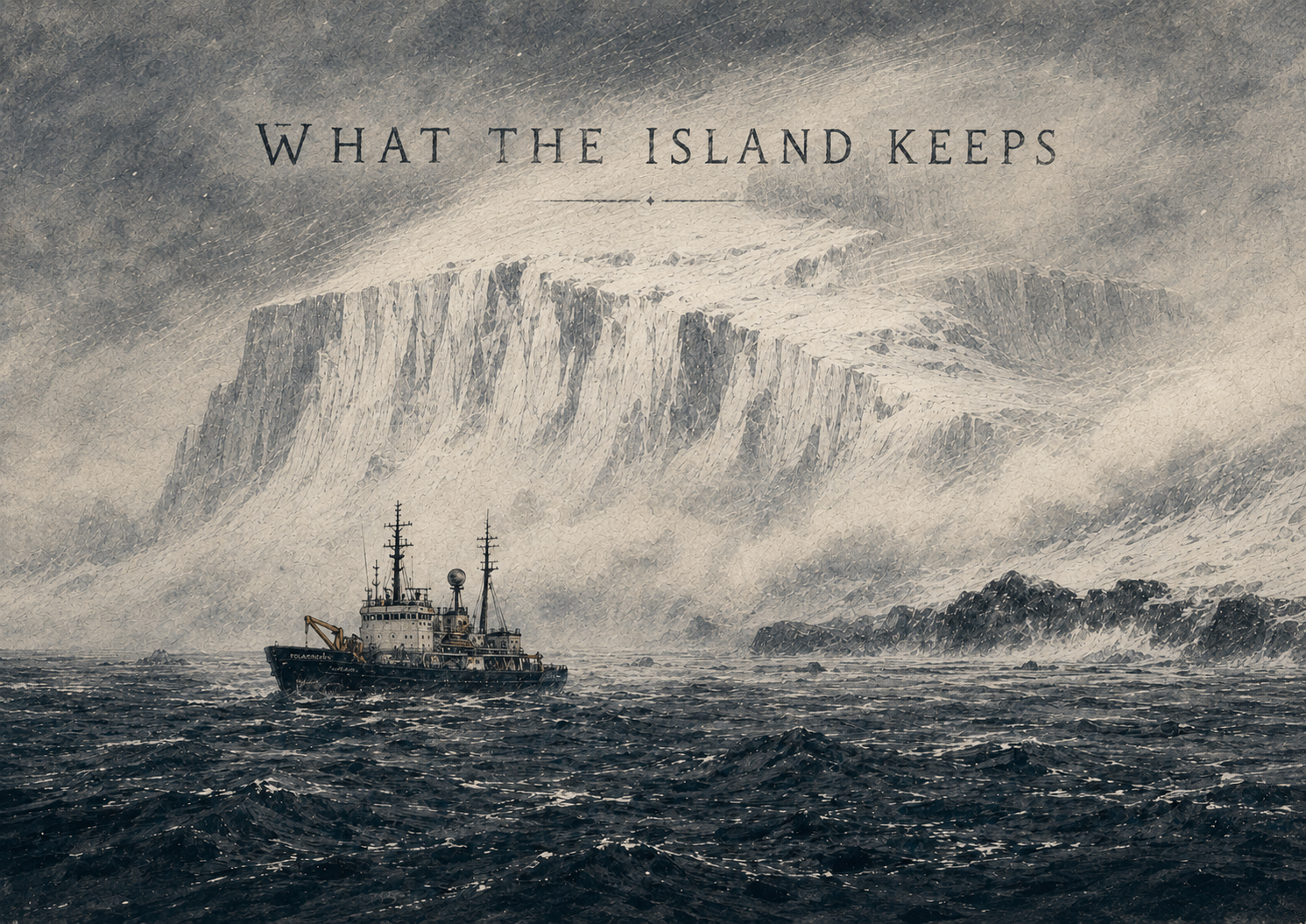
Some destinations are difficult to reach.
Some require multiple flights, a ferry, and a bit of patience.
Then there's Bouvet Island.
Wrong turn approved.
Where Is Bouvet Island?
Bouvet Island (Bouvetøya in Norwegian) is located in the South Atlantic Ocean.
It sits roughly halfway between southern Africa and Antarctica, although "halfway" still involves enormous distances.
The nearest continent is Antarctica, more than 1,700 kilometers (1,050 miles) away.
The nearest inhabited land is even farther.
In practical terms, Bouvet Island is surrounded by thousands of kilometers of ocean in almost every direction.
No neighboring islands.
No nearby towns.
No accidental detours.
Just water.
Lots of it.
Who Owns Bouvet Island?
Despite its remote location, Bouvet Island belongs to Norway.
The island was claimed by Norway in 1927 and officially became a Norwegian dependency a few years later.
Today, it remains one of Norway's overseas territories.
Unlike many remote islands, Bouvet Island has no permanent population.
No villages.
No hotels.
No airport.
No harbor.
Not even a weather station staffed year-round.
Just ice, volcanic rock, glaciers, and an astonishing amount of isolation.
Why Is Bouvet Island So Remote?
The simple answer?
Geography.
The island sits in one of the most isolated parts of the Southern Ocean.
There are no major shipping routes nearby and no regular transportation links.
Even reaching the island by research vessel can be difficult because of rough seas, unpredictable weather, and steep coastal cliffs.
In many places, landing is nearly impossible.
The ocean acts like a giant natural barrier.
And the island itself doesn't make things easier.
Imagine a fortress made of ice and volcanic rock.
Then place it in the middle of nowhere.
That's Bouvet Island.
What Does Bouvet Island Look Like?
At first glance, it doesn't look like a tropical island at all.
Almost 90 percent of Bouvet Island is covered by glaciers.
The landscape consists of rugged cliffs, snow-covered slopes, volcanic terrain, and icy coastlines.
There are no palm trees.
No beach bars.
No postcards featuring cocktails.
Instead, the island looks like a place a movie director would choose for the final scene before civilization disappears.
Remote.
Cold.
Unreal.
Why Do So Few People Visit?
Because getting there is incredibly difficult.
There are no commercial flights.
No cruise ships making regular stops.
No tourism infrastructure.
Even scientific expeditions face logistical challenges.
For most people, visiting Bouvet Island is simply unrealistic.
And that's part of what makes it fascinating.
The island exists.
You can point to it on a map.
But it still feels more like a rumor than a destination.
Is Bouvet Island the Most Remote Island in the World?
Many geographers consider Bouvet Island to be the most remote uninhabited island on Earth.
There are other isolated islands around the globe, but Bouvet's combination of distance, harsh weather, and lack of accessibility places it in a category of its own.
It's not just far away.
It's inconveniently far away.
The kind of place where even the map seems surprised to find it.