A single glittering stone in the sand changed everything.
Within years, a thriving town rose from nothing in one of the driest deserts on Earth.
Wrong turn approved.
It Started With a Shiny Stone
In , a railway worker named Zacharias Lewala spotted a small sparkling stone near the tracks in what is now Namibia.
The stone turned out to be a diamond.
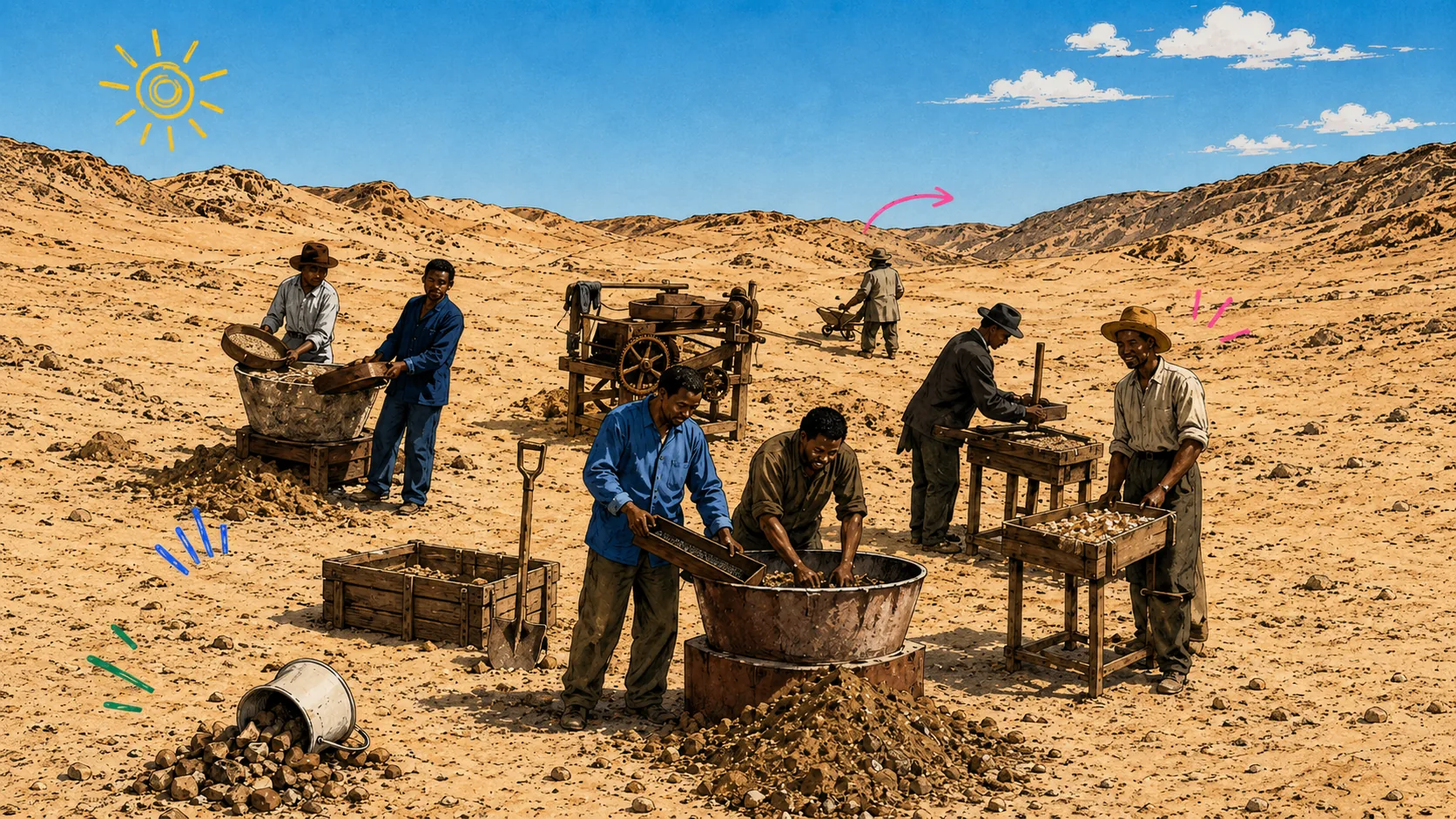
That discovery changed everything. News spread quickly, and prospectors rushed into the desert hoping to strike it rich. The region soon became one of the world's most productive diamond fields.
The desert suddenly had something everyone wanted.
A European Town in the Middle of Nowhere
As mining profits grew, a settlement appeared among the dunes. That settlement became Kolmanskop.
And it was surprisingly luxurious.
The town featured large houses, a hospital, a school, a ballroom, a theater, and even a bowling alley. Residents enjoyed imported goods from Europe, and some homes had amenities that were rare even in larger cities at the time.
Not bad for a place surrounded by sand.
Imagine finding a fully equipped German-style town in one of the driest deserts on Earth. That was Kolmanskop.
The Boom Years
At its peak, Kolmanskop was booming.
Diamonds were so abundant that some could reportedly be picked up directly from the ground.
Mining companies invested heavily in infrastructure, and workers arrived seeking opportunity. The town became a symbol of prosperity.
For a while, it seemed unstoppable.
The plan was simple: find diamonds, make money, keep growing.
The desert had other plans.
Life on the Edge of the Namib
Despite its wealth, life in Kolmanskop wasn't easy.
Fresh water had to be brought in from distant locations.
Summer temperatures were brutal.
Sandstorms were frequent guests.
The town existed because of diamonds, not because the location made sense.
Everything depended on the mines continuing to produce.
And eventually, they didn't.
When the Diamonds Moved
In the , richer diamond deposits were discovered farther south.
The mining industry followed the new opportunities.
Workers left. Investment slowed. Businesses closed.
The town that had grown almost overnight began to empty just as quickly. By , Kolmanskop was officially abandoned.
Read what happened next in Why Was Kolmanskop Abandoned?
The Desert Takes It Back
As residents departed, Kolmanskop was left exposed to the environment that had always surrounded it.
The desert moved in.
Windows shattered. Doors disappeared. Sand drifted through hallways and bedrooms.
The dunes reclaimed room after room.
Today, some houses are filled halfway to the ceiling with golden sand. The same desert that helped reveal the diamonds slowly erased the town built around them.