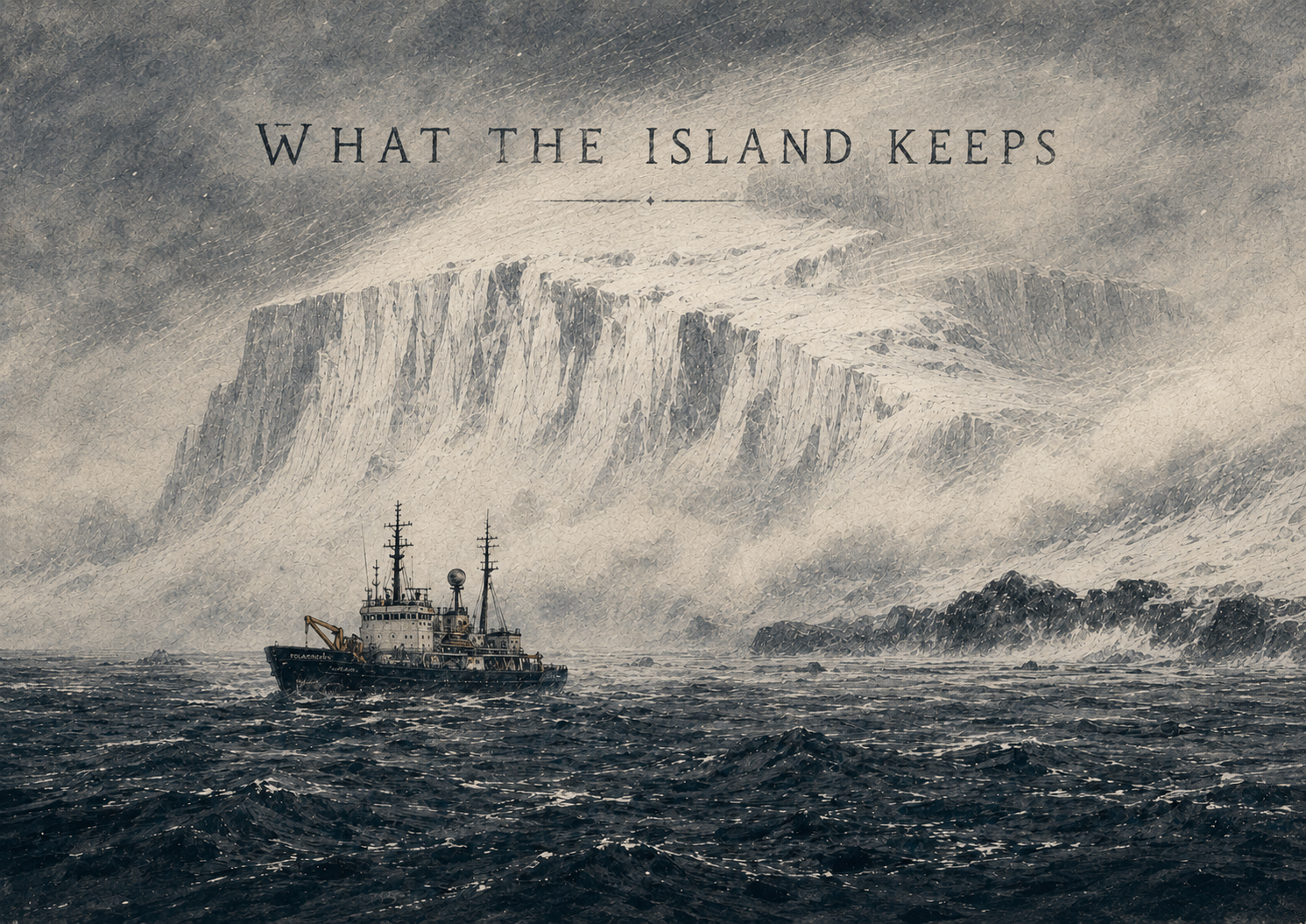
Somewhere in the South Atlantic Ocean, far beyond normal travel plans and reasonable weather forecasts, lies Bouvetøya — one of the most remote islands on Earth.
No towns. No roads. No coffee shops bravely claiming to have Wi-Fi.
Just ice, cliffs, crashing waves, and a surprising number of animals that somehow looked at this frozen volcanic rock and thought:
"Yes. This will do."
Welcome to the wildlife of Bouvetøya.
The Real Owners of the Island: Penguins
If you arrive on Bouvetøya — which is already a very ambitious if — you'll quickly discover that humans are not the main characters here.
Penguins are.
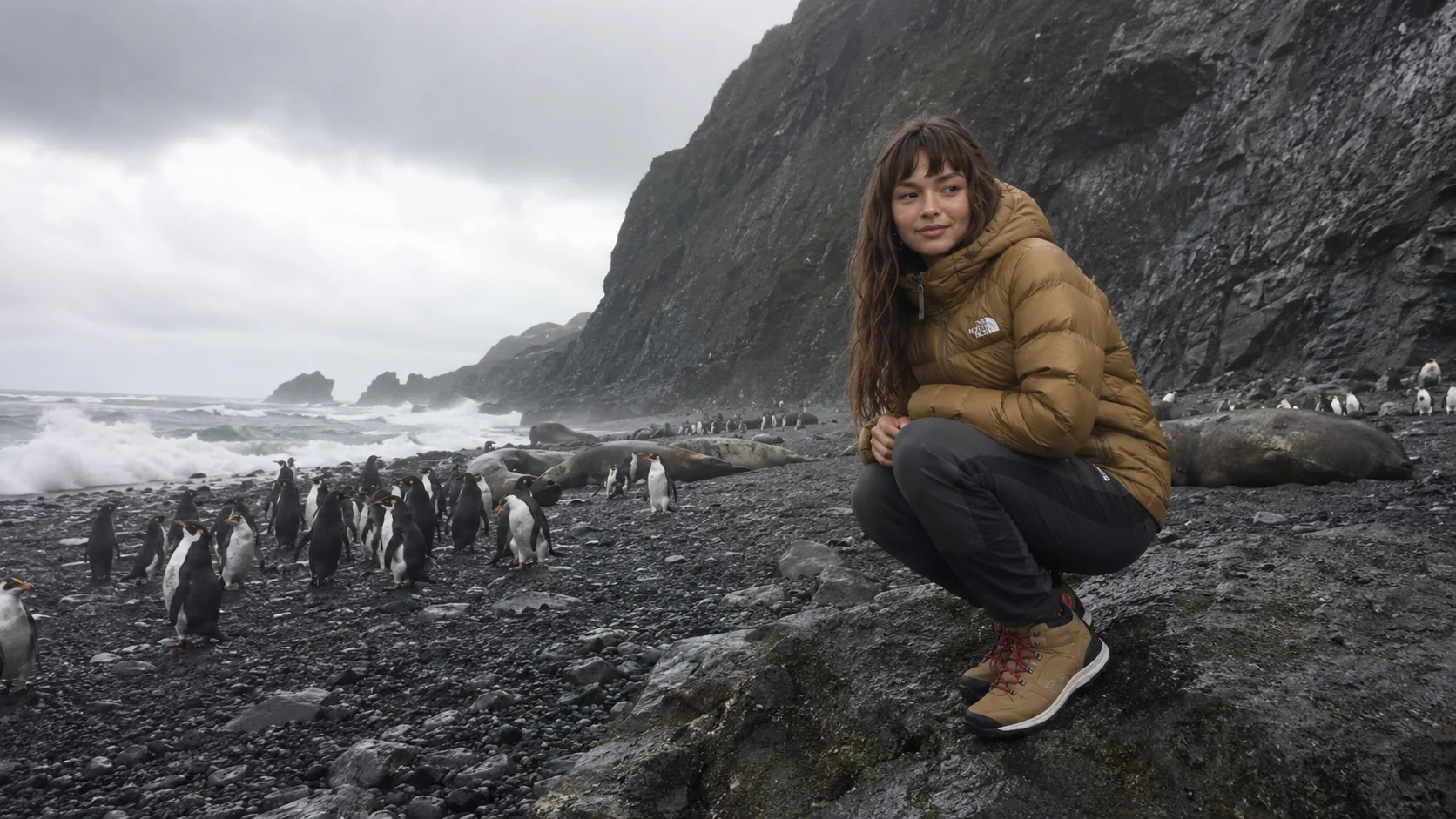
Several species use the island as a breeding and resting site, turning narrow coastal areas into noisy, crowded neighborhoods of feathers and attitude.
Chinstrap Penguins
Recognizable by the thin black line under their heads, Chinstrap Penguins look permanently dressed for a formal event they never agreed to attend.
They gather in large colonies, surviving fierce winds, freezing temperatures, and neighbors that never stop talking.
Survival skill: Turning impossible weather into a normal Tuesday.
Macaroni Penguins
Possibly the most fashionable residents of Bouvetøya.
Their bright yellow crests make them look like rock stars who accidentally joined an Antarctic expedition.
Vera's verdict: "Look at them. This place makes no sense. I love it."
Mila's verdict: "They're dressed better than we are."
Adélie Penguins
Smaller, energetic, and built for cold conditions, Adélie Penguins spend much of their lives navigating sea ice and rough ocean waters.
They may look cute.
They are also professional survivors.
The Coastal Giants: Seals
Penguins may be louder, but seals are larger, heavier, and considerably less interested in personal space.
Southern Elephant Seals
The heavyweight champions of the island.
Adult males can grow to extraordinary sizes and spend much of their lives at sea before returning to shore to rest, molt, and compete for breeding territory.
When they move, the entire beach notices.
When they don't move, they resemble oddly shaped boulders.
Antarctic Fur Seals
Fast, agile, and surprisingly curious, Fur Seals are among the most common marine visitors around the island.
Unlike Elephant Seals, they can move across rocky coastlines with impressive speed.
Mila's field observation: "That seal crossed the beach faster than I crossed the airport."
Why So Many Animals Live Here
At first glance, Bouvetøya looks completely inhospitable.
Which is exactly why wildlife loves it.
The island has:
- No permanent human population
- Almost no human disturbance
- Rich surrounding waters full of fish and krill
- Protected breeding areas
- Vast ocean access
For penguins and seals, isolation is not a problem.
It's a luxury.
The same reason most people never visit is the reason these species thrive.
Survival at the Edge of the Map
Life on Bouvetøya is not easy.
Temperatures remain low throughout the year. Storms arrive without invitation. Huge waves batter the shoreline. Much of the island is covered by glaciers.
Yet generation after generation of wildlife continues to return.
Because survival here is not about comfort.
It's about adaptation.
Every penguin colony, every seal haul-out, every successful breeding season is proof that life can flourish in places that seem impossible.
No One Told Us
No one told us the most remote island on Earth would have so many residents.
No one told us the penguins would look completely unbothered by conditions that would send most humans back indoors.
No one told us the seals would appear to have mastered the art of doing absolutely nothing.
But honestly?
That made the story better.