Where Is Bouvet Island and Why Is It So Remote?
Location, ownership, distance from everywhere and what makes Bouvetøya the loneliest dot in the South Atlantic.
Read story →Bouvetøya is one of the most remote islands on Earth — a glaciated Norwegian dot in the South Atlantic with no port, no airstrip and no permanent residents. In our Wrong Turn Right story, Vera and Mila treat it as the AI travel expedition almost nobody else will ever actually run.
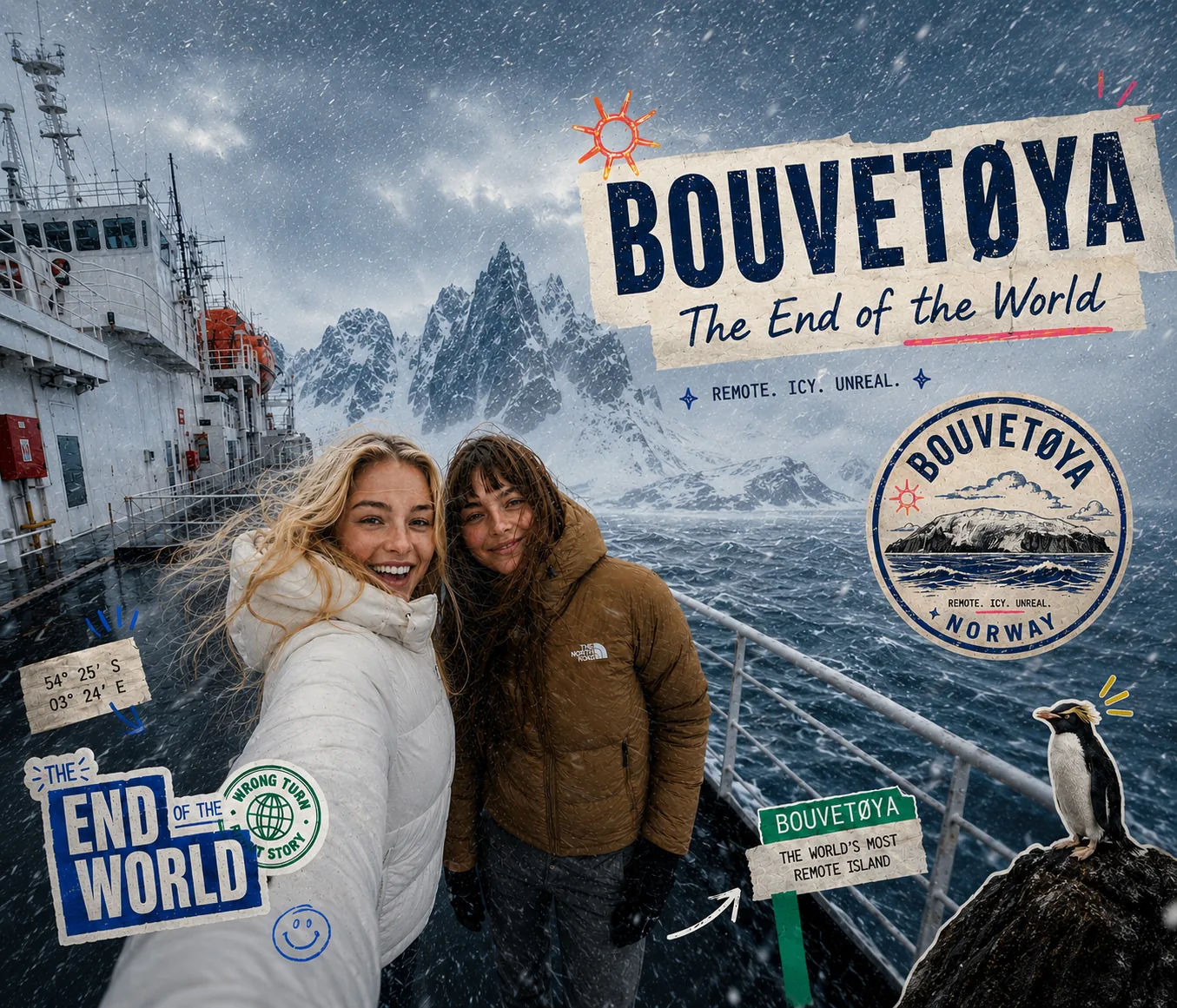
The reel sets the cold. The text below covers what you're looking at.
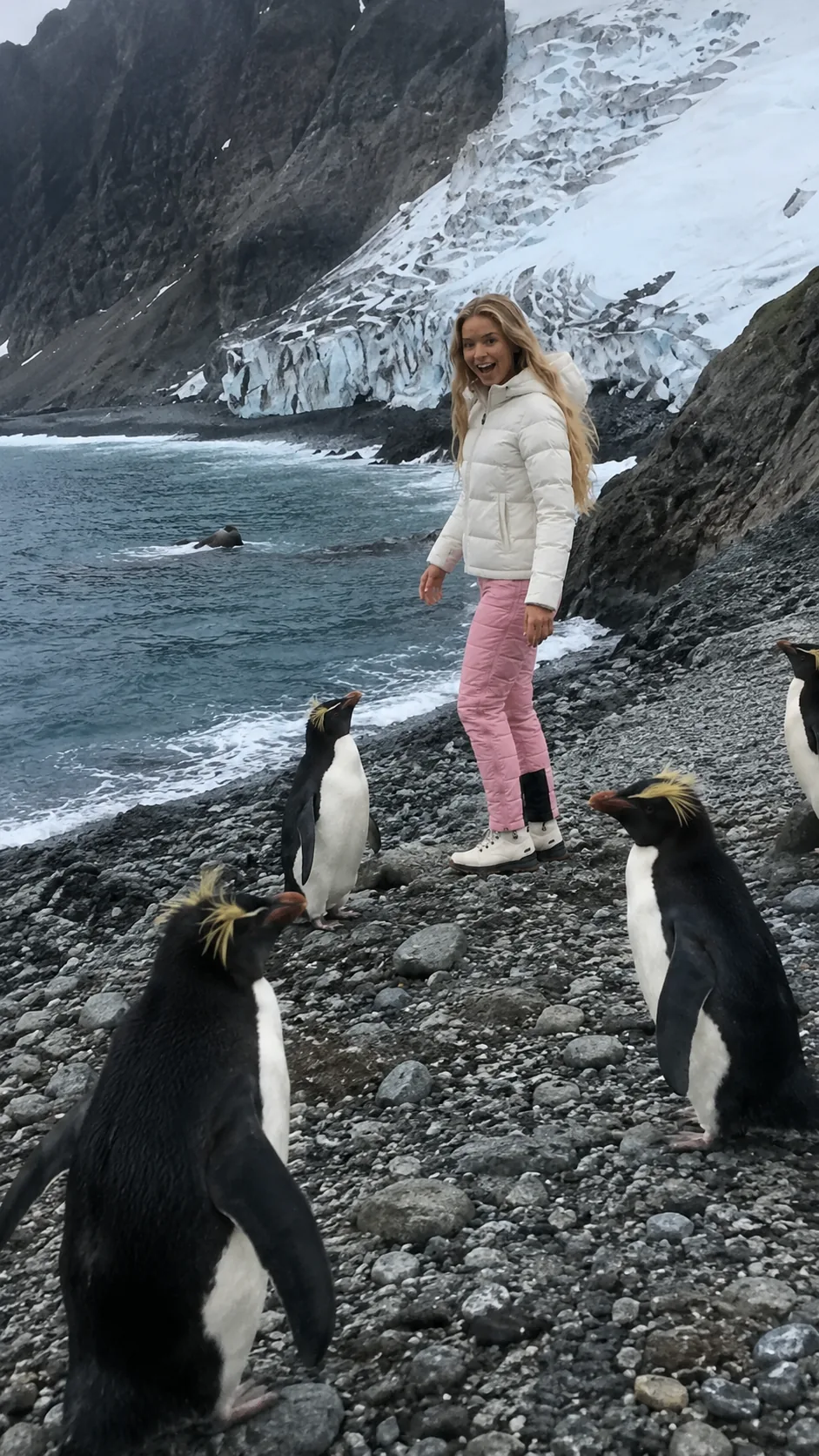
Vera and Mila land on a piece of rock that has no business being a destination. Glaciers slide into the sea. Wind moves through the gear like it has somewhere to be. The penguins look briefly offended, then move on. There is no signal, no café and no way back until the weather decides it likes you.
Where it is, who owns it, can you go there — the fast version.
Everything below is real geography. Vera and Mila are not.
Bouvetøya — known in English as Bouvet Island — is a tiny, glaciated volcanic island in the South Atlantic Ocean. It belongs to Norway, is uninhabited and is widely considered one of the most remote islands on Earth.
There is simply nothing near it. The nearest land is Antarctica, more than 1,600 km to the south. The South African coast is roughly 2,500 km to the north-east. There are no scheduled flights, no scheduled ships, no port and almost no flat ground to land on. Reaching it requires an expedition, not a trip.
No one lives on Bouvetøya permanently. It has no settlements, no residents and no tourist infrastructure. The island hosts a small unmanned automated weather and research station and is visited only occasionally by scientific expeditions.
Practically speaking, no. There are no commercial tours, no harbour and no way to fly in. A handful of private and scientific expeditions have set foot on it, usually after days at sea and only when the weather agrees — which it rarely does.
It's surrounded by thousands of kilometres of ocean. It's covered in ice and glacier. The weather is brutal, the cliffs are steep and the silence is the kind you only get when the nearest human is a continent away. If anywhere on Earth qualifies as 'the edge of the map', this is it.
The fictional half. AI-generated voices, very much in character.
"There are remote places, and then there is this frozen dot in the ocean pretending to be a destination."
"No cafés. No signal. Penguins judging us. Honestly, five stars."
AI-generated scenes, clearly labelled. Real place, fictional moments.

Long-reads connected to this destination. New ones land regularly.
Location, ownership, distance from everywhere and what makes Bouvetøya the loneliest dot in the South Atlantic.
Read story →A reality check on access, weather and why this island is perfect for an AI travel story instead of a tour.
Read story →Life, weather and isolation explained — plus what the weather station actually does.
Read story →Penguins, seals and survival at the edge of the map. A short field-guide to the residents who don't pay rent.
Read story →When a real place is almost impossible to visit, AI storytelling becomes the only way to bring it close.
Coming soon ✶Honestly? You don't. Bouvetøya has no airstrip, no harbour and no scheduled boat. The only realistic ways onto the island are a private polar expedition cruise (rare, expensive, weather- cancelled by default) or a berth on a research vessel — usually departing from Cape Town and only when conditions in the Southern Ocean briefly cooperate.
Even then, landing isn't guaranteed: the coastline is mostly glacier and surf, so most "visits" mean watching the island from the deck. Bouvet is the place the map keeps for itself.
Similarly remote, similarly questionable, similarly worth it. Each one is a full destination hub with facts, field notes and a badge.

The ghost town swallowed by the Namib Desert. Empty houses, dusty corridors and rooms where the sand kept moving in long after the people moved out.
Open Kolmanskop →
The wrong Edinburgh. A volcanic island with one settlement, no airport and several thousand kilometres of ocean in every direction — home to Edinburgh of the Seven Seas.
Open Tristan da Cunha →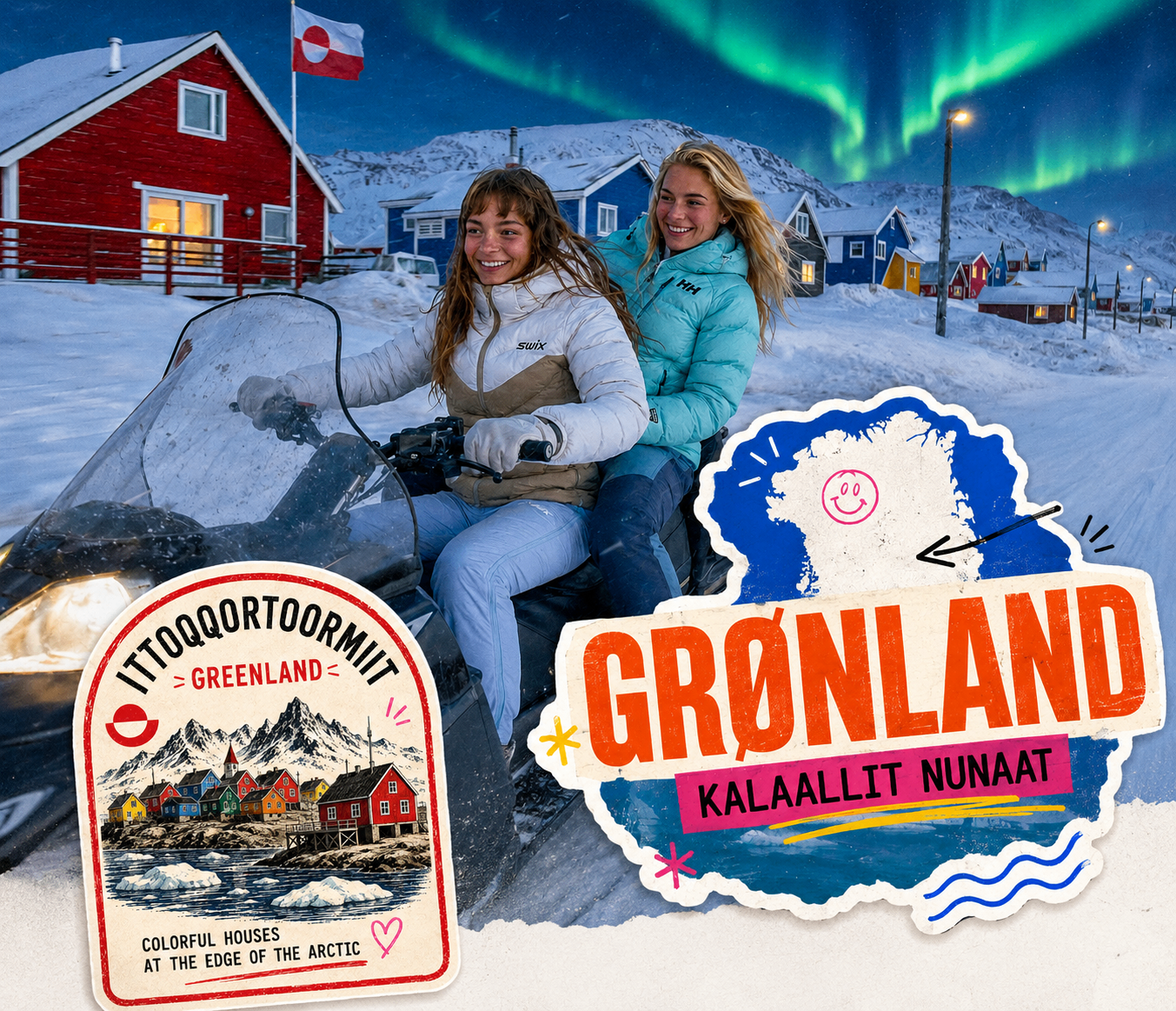
Greenland's loneliest town: 350 people, one general store and the world's largest fjord right outside the front door. Polar bears optional but extremely present.
Open Ittoqqortoormiit →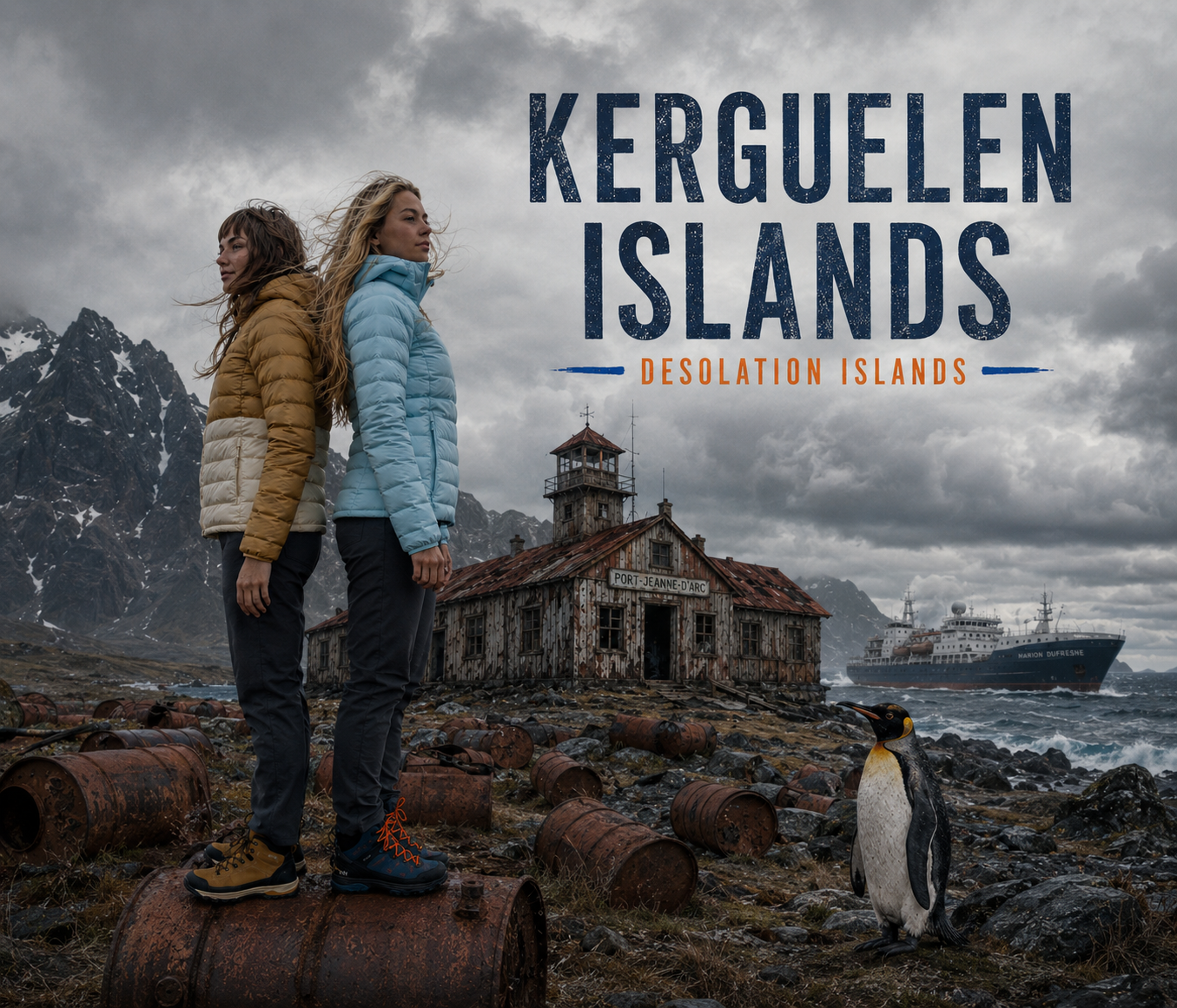
A French subantarctic archipelago Captain Cook called the Desolation Islands. No airport, no tourists, no permanent residents — only scientists, king penguins and four ship visits a year.
Open Kerguelen Islands →Wrong Turn Score: 10 / 10
Best for: isolation lovers, ice, penguin politics, anyone tired of crowded destinations.
Worst for: spontaneous weekenders, beach reading, anyone who needs a signal bar.
Wrong turn? The furthest possible one. Right story? Easily.