There are places where finding a boat is ordinary.
A harbour.
A beach.
A fishing village.
A riverbank after a storm.
Bouvet Island is not one of those places.
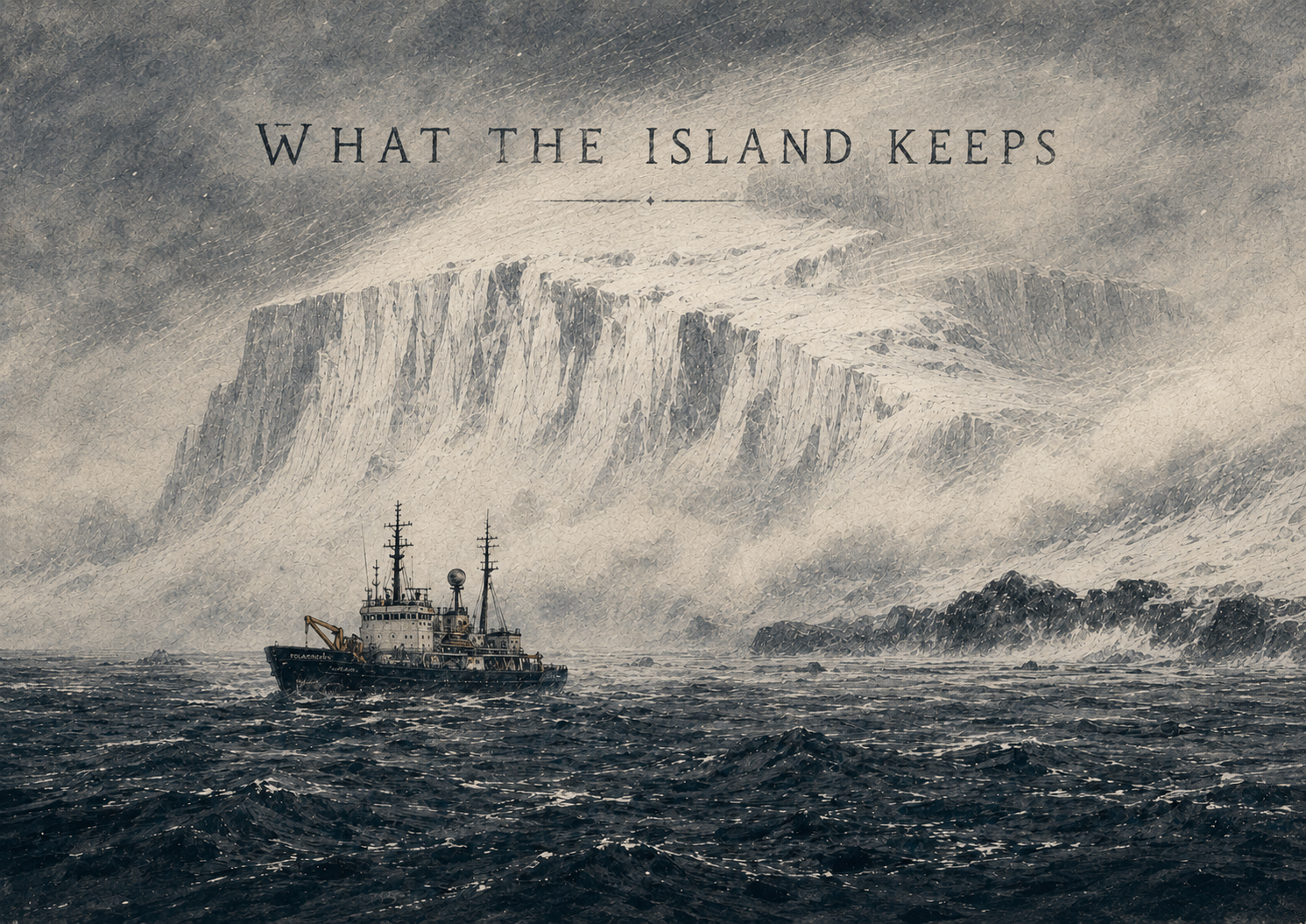
Bouvet Island is a frozen volcanic rock in the South Atlantic, covered mostly by ice, surrounded by violent seas and located so far from other land that it is often described as the most remote island on Earth.
It has no permanent population. No harbour. No town. No safe, easy landing place.
And yet, in 1964, a British survey team landed on the island and found a lifeboat.
Abandoned. Sitting in a small lagoon. With no people nearby. No obvious camp. No clear explanation.
For years, the boat became one of the strangest small mysteries in polar history: a human object discovered in a place where almost no humans ever go.
How did a lifeboat get to Bouvet Island — and where did the people go?
The Island at the End of the Map
Bouvet Island, or Bouvetøya, is a Norwegian dependency in the South Atlantic Ocean. It is small, glaciated, volcanic and extremely isolated. Most of the island is covered by ice, and its steep cliffs, rough surf and harsh weather make landing difficult even for experienced expeditions.
It is not a place where people accidentally wash up after a casual sailing trip.
No villages. No fishing families. No passing tourists. No road to nowhere because there is no road at all.
Even reaching the island deliberately requires planning, a capable vessel, suitable weather and luck.
That is why the lifeboat was so strange.
On an ordinary coast, an abandoned boat suggests neglect, theft, storm damage or a forgotten mooring. On Bouvet, it suggests a story. And possibly a disaster.
The Landing at Nyrøysa
In 1964, the British naval vessel HMS Protector visited Bouvet Island.
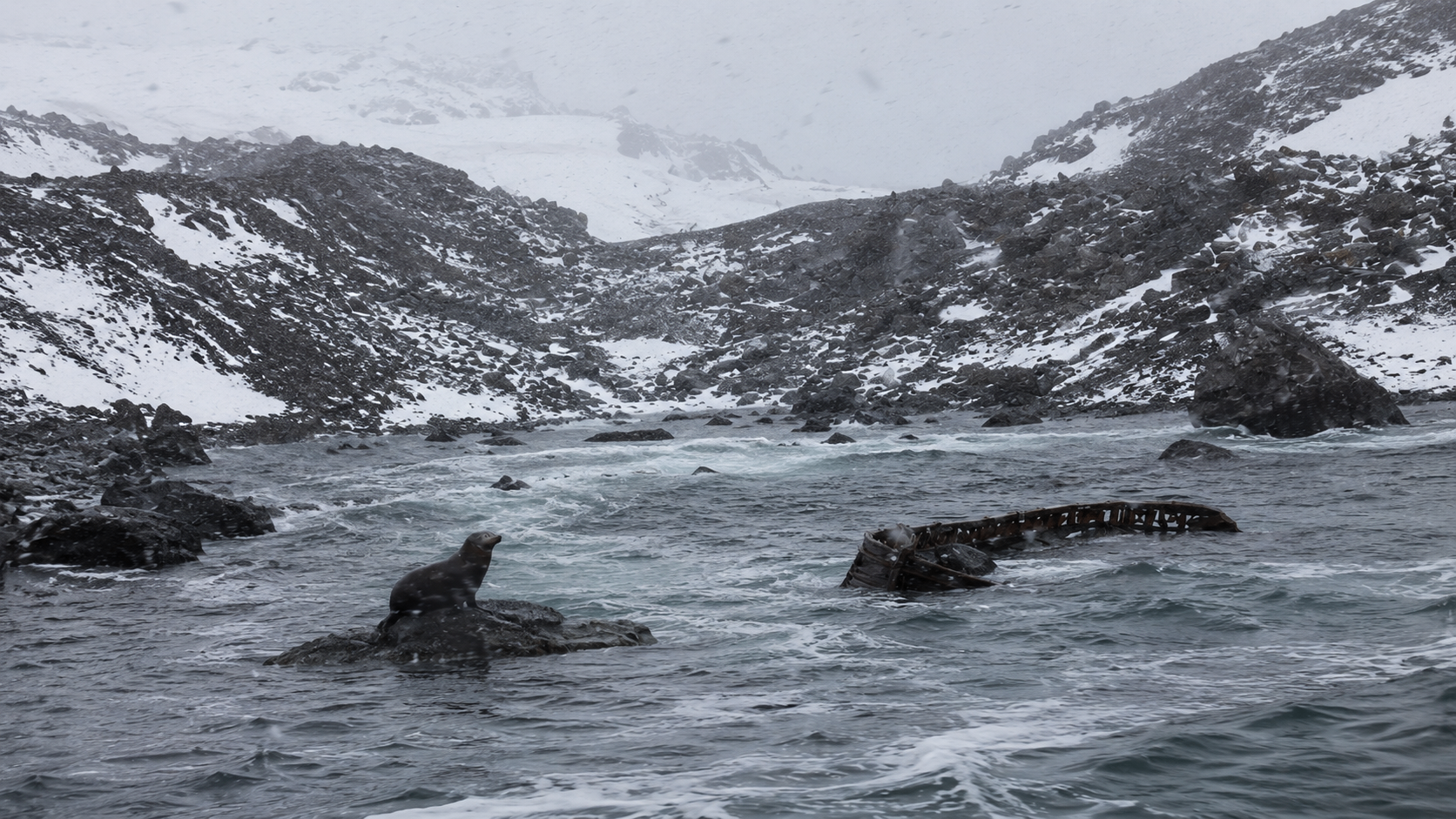
A small survey team, led by Lieutenant Commander Alan Crawford, was landed by helicopter at Nyrøysa, a relatively new ice-free area on the island's north-western coast. Nyrøysa had appeared after a rockslide sometime in the late 1950s and became one of the few places on Bouvet where landing was even remotely practical.
The team did not have unlimited time. Bouvet does not reward long casual walks. Weather can change quickly, and the island's terrain is dangerous. The survey party was there briefly, working under the pressure of a place that never feels fully available.
Then they saw it. A lifeboat.
It was lying in a small lagoon.
The boat did not belong to the British team. It did not obviously belong to any known recent landing party. And most disturbingly, it was alone.
The team searched quickly. They found no people. No bodies. No definite signs of a long camp. No clear answer.
A lifeboat is usually an object of escape. On Bouvet, it looked like an unfinished sentence.
Why the Discovery Felt Impossible
The mystery works because Bouvet Island is not just remote. It is hostile to arrival.
A person cannot simply drift there, step ashore, explore and leave without the island recording the difficulty in every movement. The cliffs are steep. The weather is brutal. The surf can make landing dangerous. Ice covers most of the island. There is no natural harbour that welcomes a tired crew.
So the abandoned lifeboat created several uncomfortable possibilities.
- Maybe survivors had reached the island and died before anyone found them.
- Maybe they had been rescued by another ship, leaving the boat behind.
- Maybe the boat had drifted there without its passengers.
- Maybe a secret expedition had landed and left no record.
- Maybe the answer was ordinary, but the island made it feel impossible.
That is the strange power of Bouvet. It turns even a small wooden boat into a ghost story.
No Bodies, No Camp, No Names
The most haunting part of the story is not the boat itself. It is the absence around it.
A lifeboat normally points back to people: a ship in trouble, a crew in panic, a landing attempt, a rescue, a death, a survival plan.
But the 1964 team found no clear human story attached to it.
No survivors stepped forward. No bodies were discovered. No nearby shelter explained who had waited there. No obvious record immediately identified the vessel.
There was only the boat and the question it carried.
This is why the Bouvet lifeboat became so memorable. It was not a giant mystery. It was not a lost city, a vanished colony or a missing expedition with hundreds of pages of evidence.
It was smaller and sharper than that. One boat. Wrong island. No people.
The First Theory: Castaways
The most dramatic theory was also the most natural one.
Perhaps a ship had gone down somewhere in the South Atlantic. Perhaps a lifeboat had survived the wreck and reached Bouvet. Perhaps the people aboard had made it to shore.
Then what?
Bouvet would not give them much. There is no forest for easy firewood. No village to stumble into. No soft coastline full of edible plants. No reliable shelter unless they could build it or find a place in the rocks.
Even if the lifeboat's passengers survived the landing, they would still face cold, exposure, hunger, injury and the island's violent weather.
If this version were true, the lack of bodies raised more questions. Swept into the sea? Buried by snow or rockfall? Taken off by another vessel? Lost during an attempt to reach a better landing place?
The castaway theory made the story powerful because it matched the island's atmosphere. But atmosphere is not evidence.
The Second Theory: A Secret Landing
Another possibility was that the lifeboat came from a deliberate landing.
Bouvet Island has attracted explorers, scientists, whalers, sealers, radio operators and national expeditions. It is not inhabited, but it is not untouched by history.
A small party might have landed, used the boat, abandoned it and left. This would explain the absence of bodies. It would also fit the strange practicality of the find: a lifeboat could be used as a landing craft, a temporary transport or an emergency backup.
But for years the problem remained the same. Which expedition? Which vessel? Why leave the boat? And why did the answer not appear immediately in official records?
Mysteries often survive not because there is no explanation, but because the paperwork is somewhere else, in another language, another archive or another country's expedition report.
Bouvet is exactly the kind of place where that can happen.
The Likely Answer: The Soviet Slava-9
The most convincing explanation points not to vanished castaways, but to a Soviet vessel.
According to later research, the lifeboat may have belonged to Slava-9, a Soviet scientific reconnaissance vessel connected with the Slava Antarctic whaling fleet.
In late November 1958, a group of sailors reportedly landed on Bouvet Island. The weather worsened, and they were unable to leave immediately. They remained on the island for about three days before being withdrawn by helicopter.
If this account is correct, the lifeboat was not evidence of a fatal mystery. It was a leftover object from a difficult but successful evacuation.
That explanation fits several details: a deliberate landing, a boat left behind, no bodies, no long-term camp, no later missing-person story connected to the discovery.
It also explains why the mystery lasted: Bouvet sits at the edge of overlapping expedition histories, Cold War-era records, whaling operations and scattered documentation.
The boat was not impossible. It was misplaced history.
Does That Solve the Mystery?
Mostly. But not completely in the emotional sense.
The likely Slava-9 explanation makes the story less supernatural, but not less interesting. In fact, it may make it more revealing.
The Bouvet lifeboat mystery shows how easily human activity can become strange when it happens in the wrong place. A boat left behind near a busy harbour is junk. A boat left behind on Bouvet Island becomes a question that lasts for decades.
The setting does half the storytelling.
Because Bouvet is so remote, every trace of human presence feels amplified. A hut can disappear into the sea. A weather station can be destroyed by storms. A landing can become legend. A lifeboat can turn into a ghost.
The real mystery may not be whether people died there. The real mystery is how a small abandoned object can make the whole island feel alive with unanswered questions.