But how does a thriving diamond town become a place where the desert moves into the living room?
The short answer: diamonds, bad timing, and a desert that never stops advancing.
Wrong turn approved.
A Town Built on Diamonds
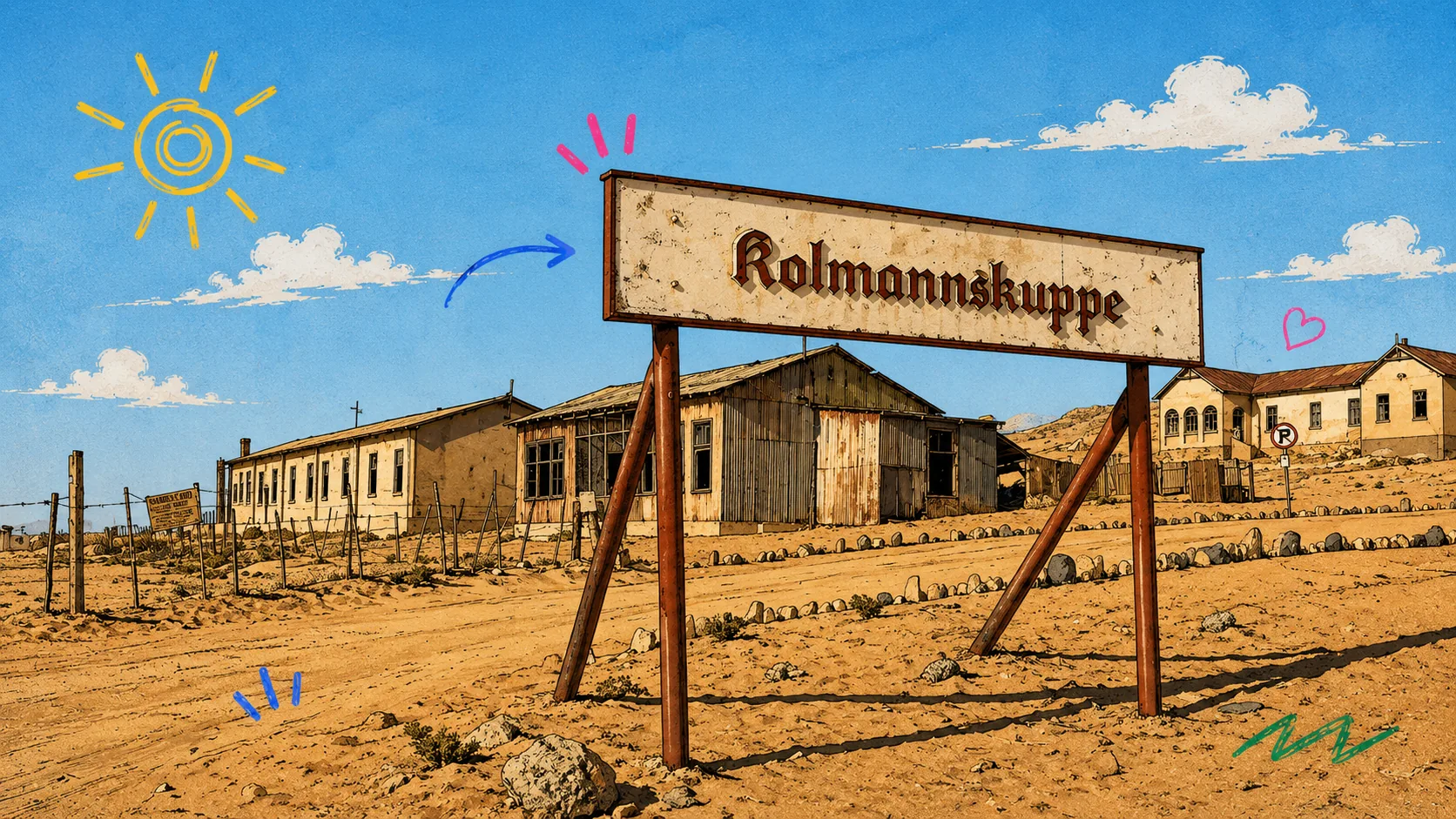
Kolmanskop was founded in , after a railway worker named Zacharias Lewala picked up a glittering stone in the sand and handed it to his German supervisor. It was a diamond.
Almost overnight, fortune seekers arrived.
The town grew surprisingly fast. There were elegant homes, a hospital, a school, a ballroom, a theater, and even one of the first X-ray stations in the southern hemisphere. At its peak, Kolmanskop looked less like a desert outpost and more like a small European town that had somehow landed in the middle of nowhere.
For a while, life was good. Very good.
Some miners reportedly found diamonds simply lying on the ground.
Not a bad commute.
So Why Was Kolmanskop Abandoned?
The town's decline started in the , when richer diamond deposits were discovered farther south near Oranjemund on the coast.
Suddenly, Kolmanskop was no longer the center of the diamond industry.
Mining companies shifted their attention to the new deposits, and many workers followed the opportunities elsewhere.
Then came another problem.
The global diamond market became less predictable, and maintaining a town in the harsh desert environment was expensive. Water had to be transported from far away, supplies were difficult to deliver, and life in the desert was never easy.
By the , most residents had left.
In , Kolmanskop was officially abandoned.
The plan had changed.
The desert had not.
The Desert Moved In
Most abandoned towns slowly fall apart.
Kolmanskop experienced something different.
The Namib Desert began reclaiming every building.
Windows broke. Doors disappeared. Sand drifted inside.
Room by room, the desert moved in and never left.
Today, some houses contain dunes several metres high. Bedrooms look like miniature deserts. Hallways disappear beneath waves of golden sand.
It feels less like a ghost town and more like a place caught between two worlds.
Part history. Part landscape. Part reminder that nature always wins eventually.
What Does Kolmanskop Feel Like Today?
Walking through Kolmanskop feels strangely unreal.
One moment you're standing in a grand ballroom.
The next, you're looking at a dune sitting where a dining table once stood.
The silence is what surprises most visitors.
No traffic. No crowds.
Just wind moving through empty rooms.
It's beautiful, eerie, and surprisingly photogenic all at the same time.
Some places feel abandoned.
Kolmanskop feels paused.