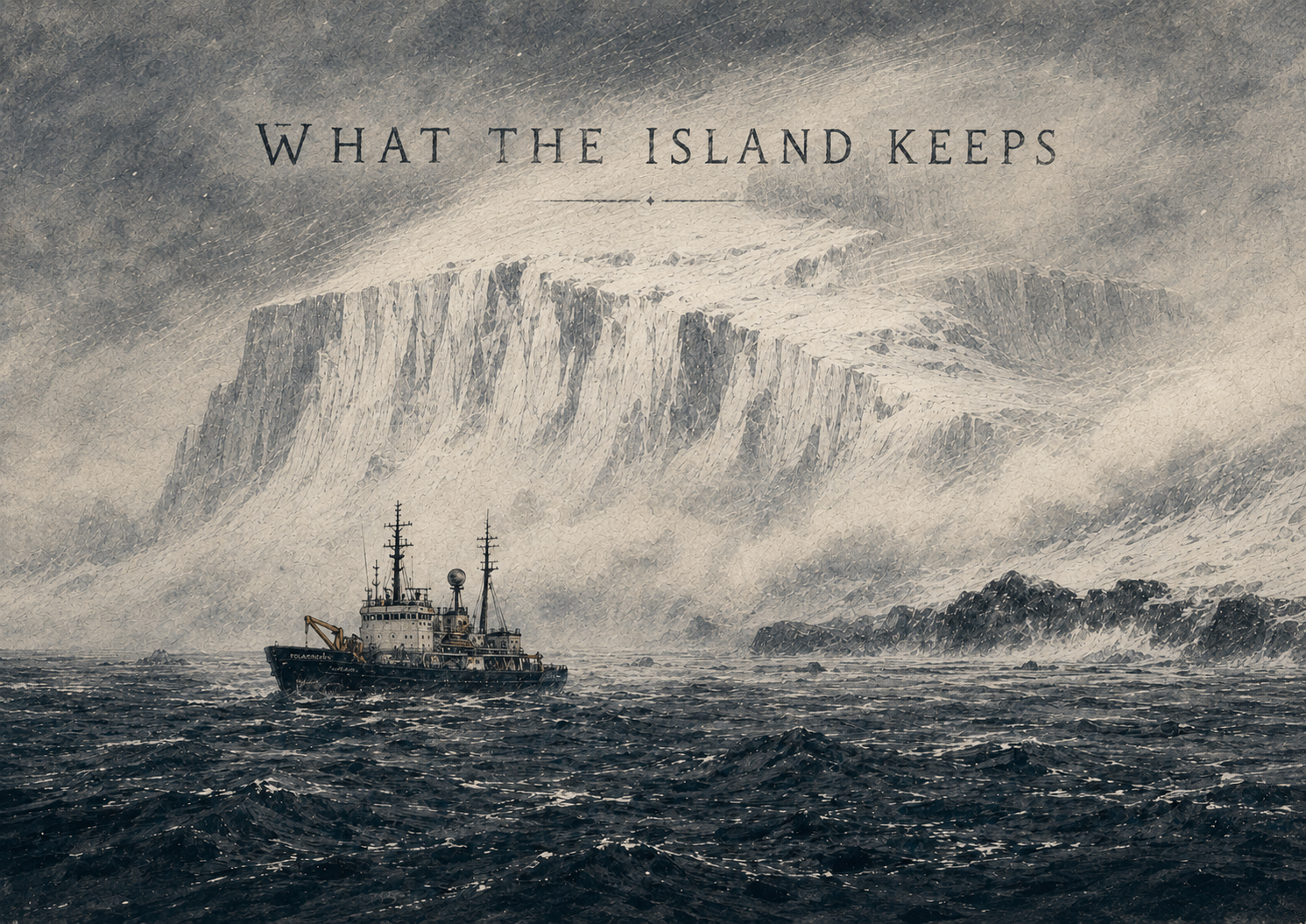
Why Was Kolmanskop Abandoned?
The diamond rush, the decline of the town and how the desert became the main character.
Read story →Kolmanskop is an abandoned diamond mining town in Namibia, slowly swallowed by desert sand. In our Wrong Turn Right story, Vera and Mila step into its empty houses, dusty corridors and strange silence — where history feels beautiful and a little bit haunted at the same time.
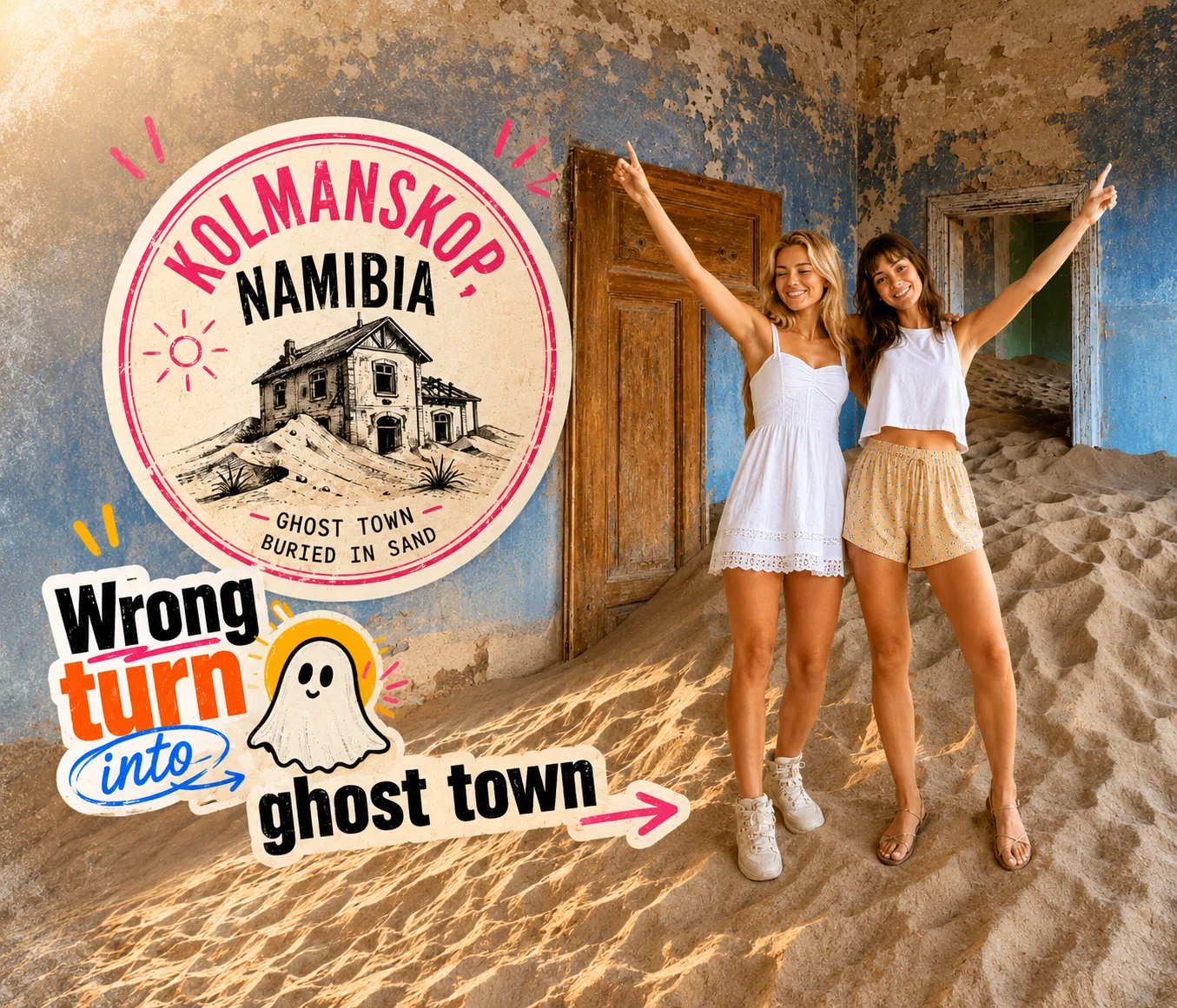
The reel sets the mood in under a minute. Below it: the full text version of what you're looking at.
Vera and Mila wade into Kolmanskop one room at a time. The doors don't close anymore. The wallpaper still tries. The sand arrives in slow waves, filling the corners of a town that stopped pretending decades ago. It's quiet in the way only abandoned places are quiet — the kind that makes you whisper even when nobody's listening.
The fast answers, before you scroll into the story.
The Wrong Turn scenes are AI-generated. The history below is not.
Kolmanskop is an abandoned diamond mining town in southern Namibia, near the port of Lüderitz. Built in the early 1900s after diamonds were discovered in the sand, it grew into a small European-style settlement with a hospital, a ballroom and an ice factory, then was abandoned within a few decades when richer diamond fields were found further south.
Mining declined sharply after World War I, and when richer diamond deposits were discovered further down the coast in the 1920s and 30s, the population followed the money. By the mid-1950s the town was effectively empty. There was no second wave — no other industry, no farming, nothing to keep people there once the diamonds were gone.
Kolmanskop sits inside the Namib Desert, one of the oldest deserts on Earth. With no one left to sweep, repair or close the doors, decades of wind pushed dunes straight through windows and doorways. Today entire rooms are half-filled with sand, and the desert has effectively reclaimed the town from the inside.
Yes. Kolmanskop is open to visitors as a guided site, with permits issued by the current operator. Most travellers come on a day trip from Lüderitz. Photographers can apply for early-morning permits to shoot inside the buildings before regular tours begin.
If you like abandoned places, desert landscapes, weird architecture and silence that feels almost loud, Kolmanskop is one of the most photogenic ghost towns in the world. It's not a long visit, but it's the kind of place that stays in your camera roll and your head for a long time.
The fictional half. AI-generated voices, very much in character.
"This place feels like someone paused a whole town and let the desert finish the sentence."
"I came for ghost town photos. I did not come for sand in my shoes, hair, camera and soul."
AI-generated scenes, clearly labelled. Real place, fictional moments.

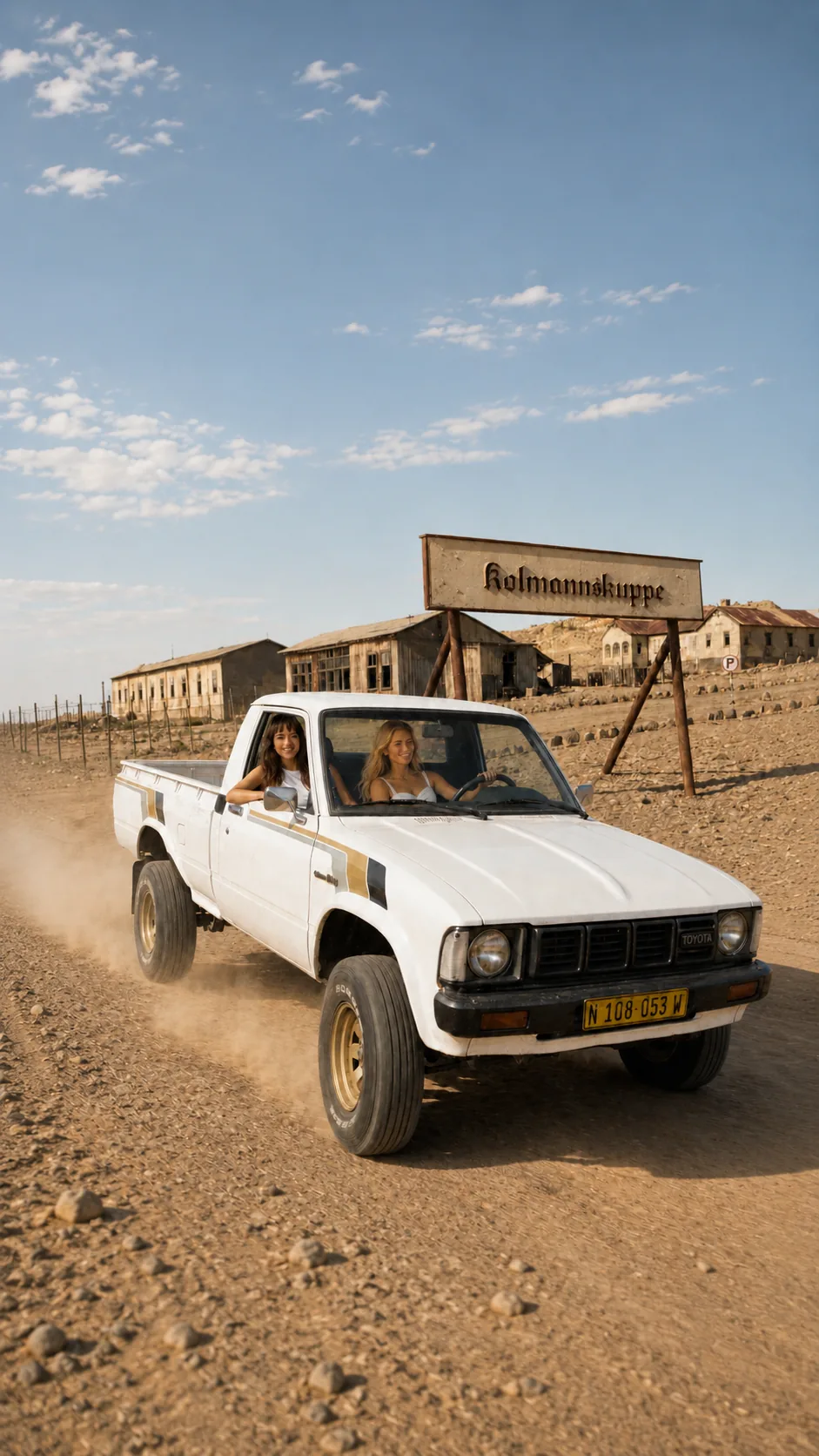

Long-reads connected to this destination. New ones land regularly.
The diamond rush, the decline of the town and how the desert became the main character.
Read story →What to know about access, permits, photo passes and the best time of day to go.
Read story →Why the sand-filled rooms look unreal and how to capture them without ruining the silence.
Coming soon ✶How Namibia's diamond ghost town compares to Pripyat, Hashima and the abandoned places of the American West.
Read story →Brief history of the boom that put a town in the desert — and the desert that took it back.
Read story →Fly to Windhoek, connect or drive to Lüderitz on the Atlantic coast, then head 10 km east on the B4 highway. Kolmanskop sits right beside the road — you'll see the rooflines half-buried in dune before the turn-off sign. A permit from the Lüderitz tourist office is required; sunrise photo permits are sold separately and are very much worth it.
Similarly remote, similarly questionable, similarly worth it. Each one is a full destination hub with facts, field notes and a badge.
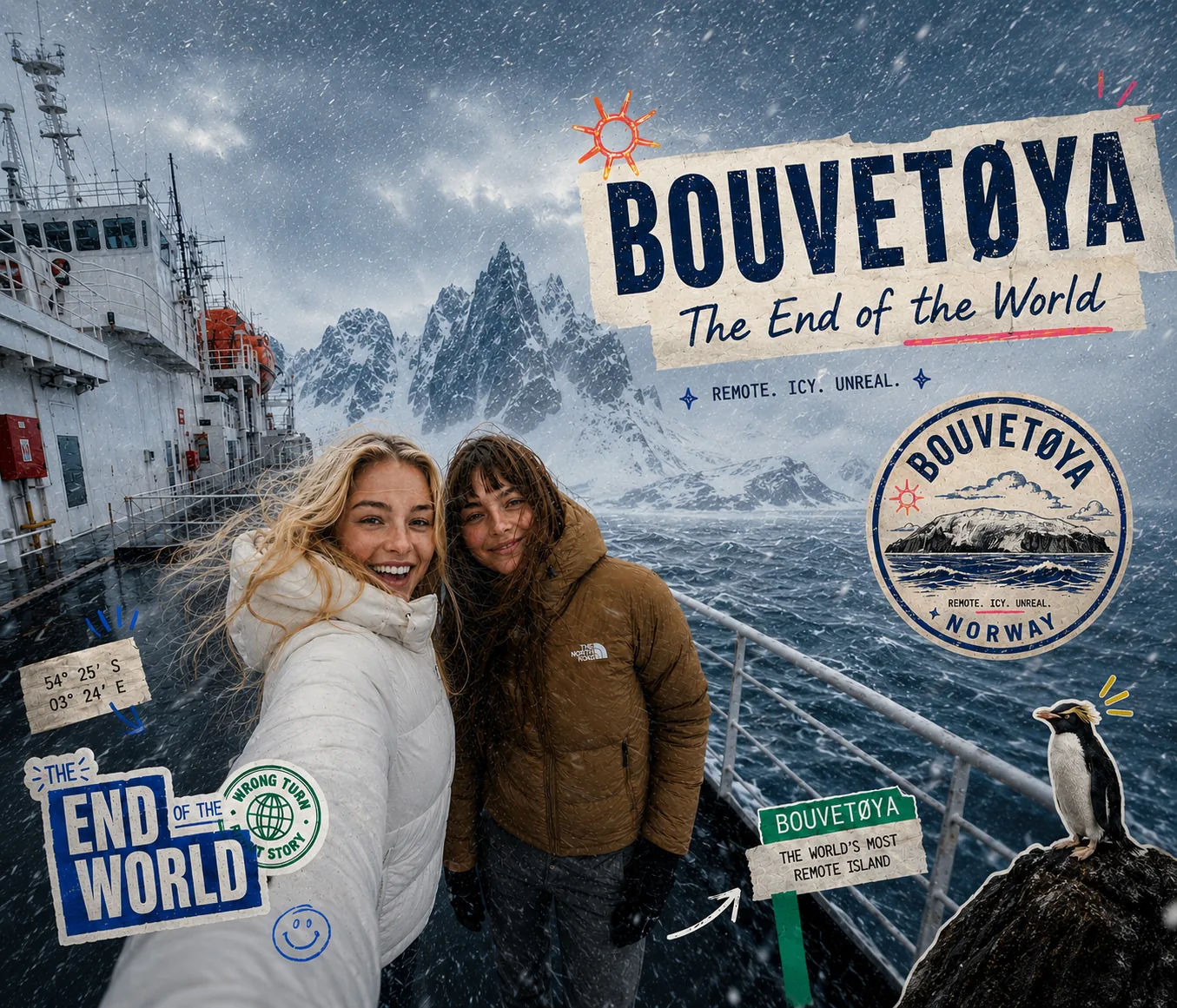
One of the most remote islands on Earth, reimagined as an AI expedition. Ice, isolation and a place you can technically point to on a map but almost never reach.
Open Bouvetøya →
The wrong Edinburgh. A volcanic island with one settlement, no airport and several thousand kilometres of ocean in every direction — home to Edinburgh of the Seven Seas.
Open Tristan da Cunha →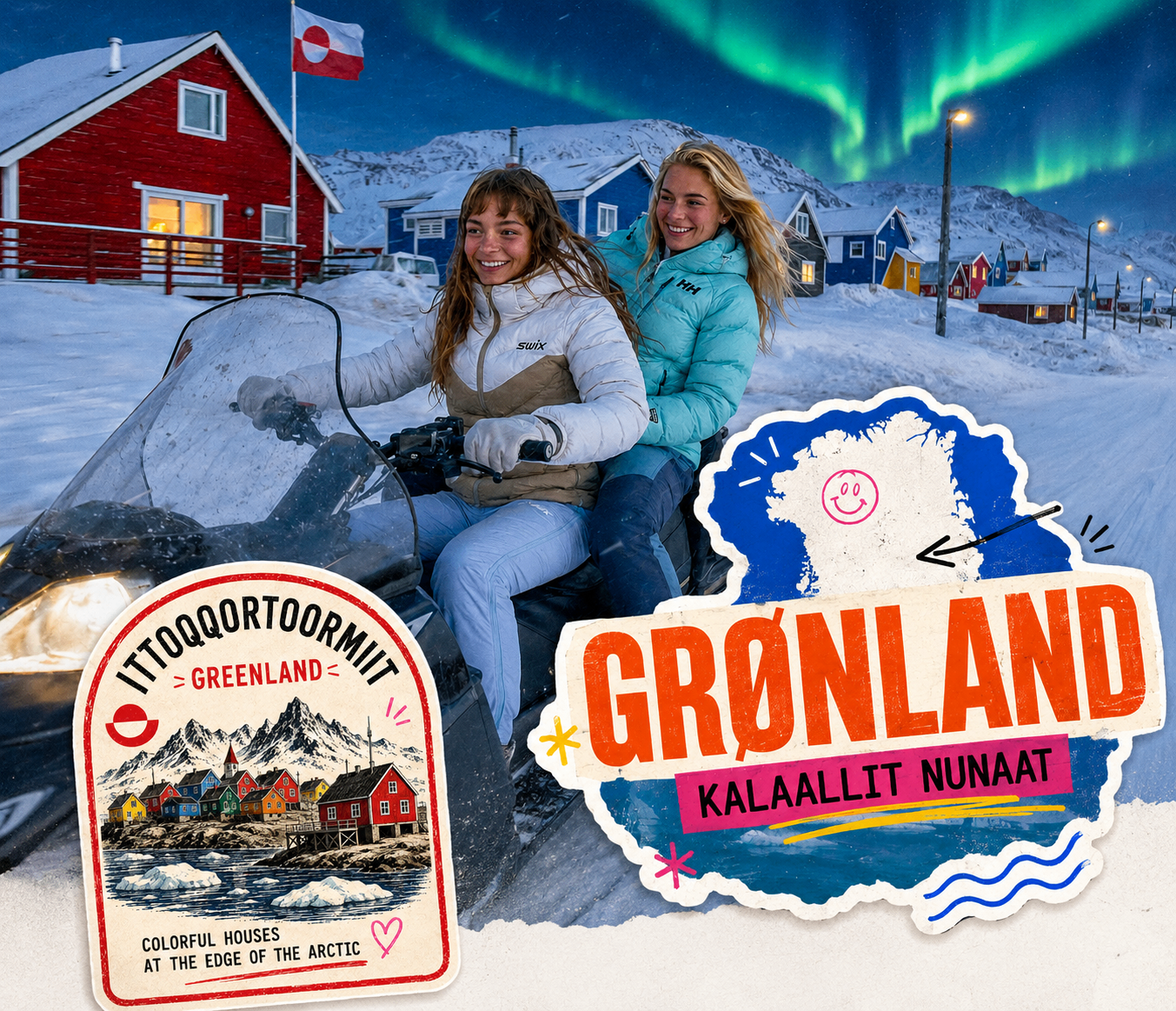
Greenland's loneliest town: 350 people, one general store and the world's largest fjord right outside the front door. Polar bears optional but extremely present.
Open Ittoqqortoormiit →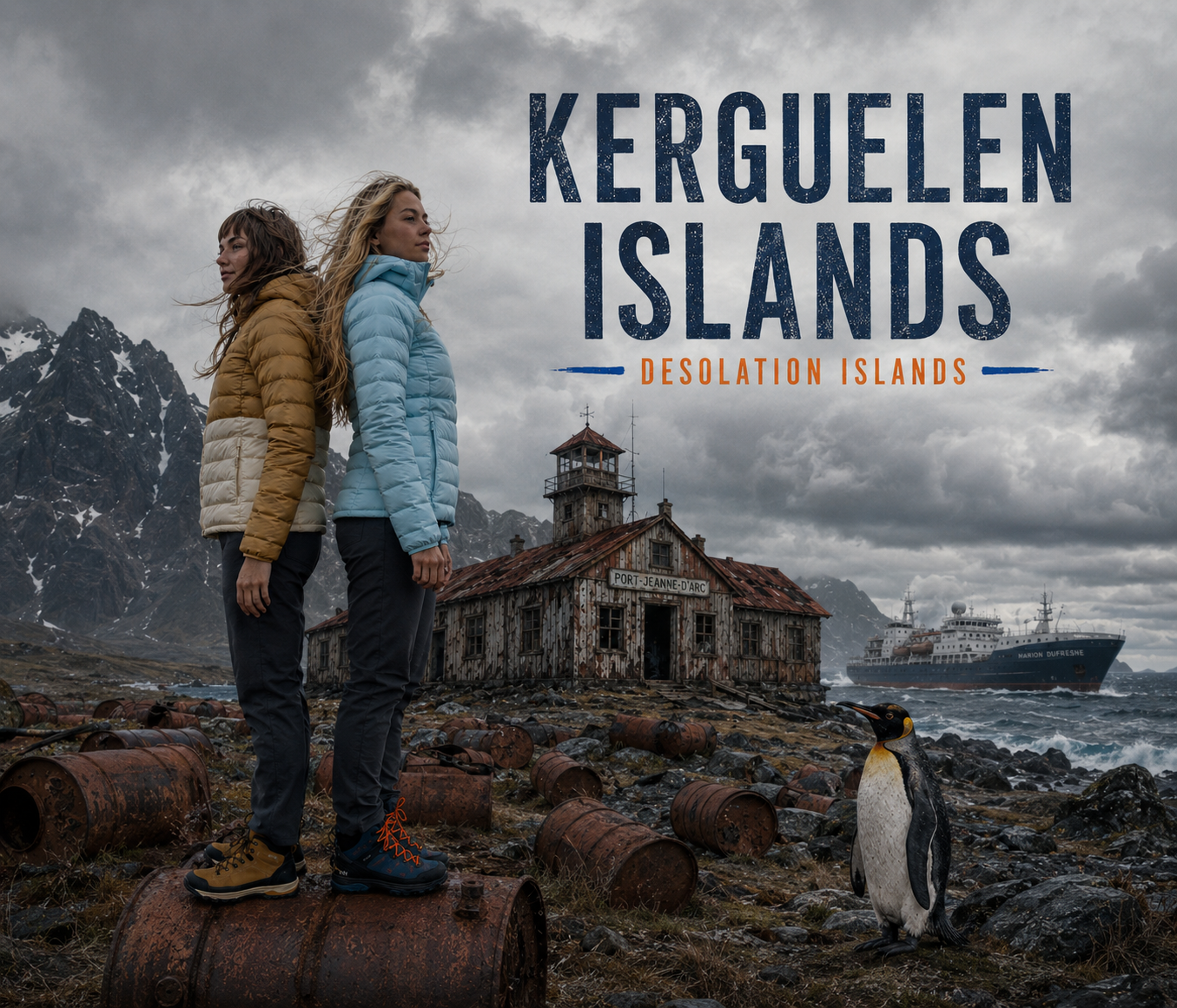
A French subantarctic archipelago Captain Cook called the Desolation Islands. No airport, no tourists, no permanent residents — only scientists, king penguins and four ship visits a year.
Open Kerguelen Islands →Wrong Turn Score: 9.4 / 10
Best for: ghost-town lovers, desert weirdness, abandoned places, photographers who like silence.
Worst for: clean shoes, shade, predictable travel plans, anyone allergic to sand.
Wrong turn? Absolutely. Right story? No question.