The Ghost Town the Desert Took Back
Some ghost towns are abandoned because of disaster.
Some because the money ran out.
And some because nature simply decided it wanted the place back.
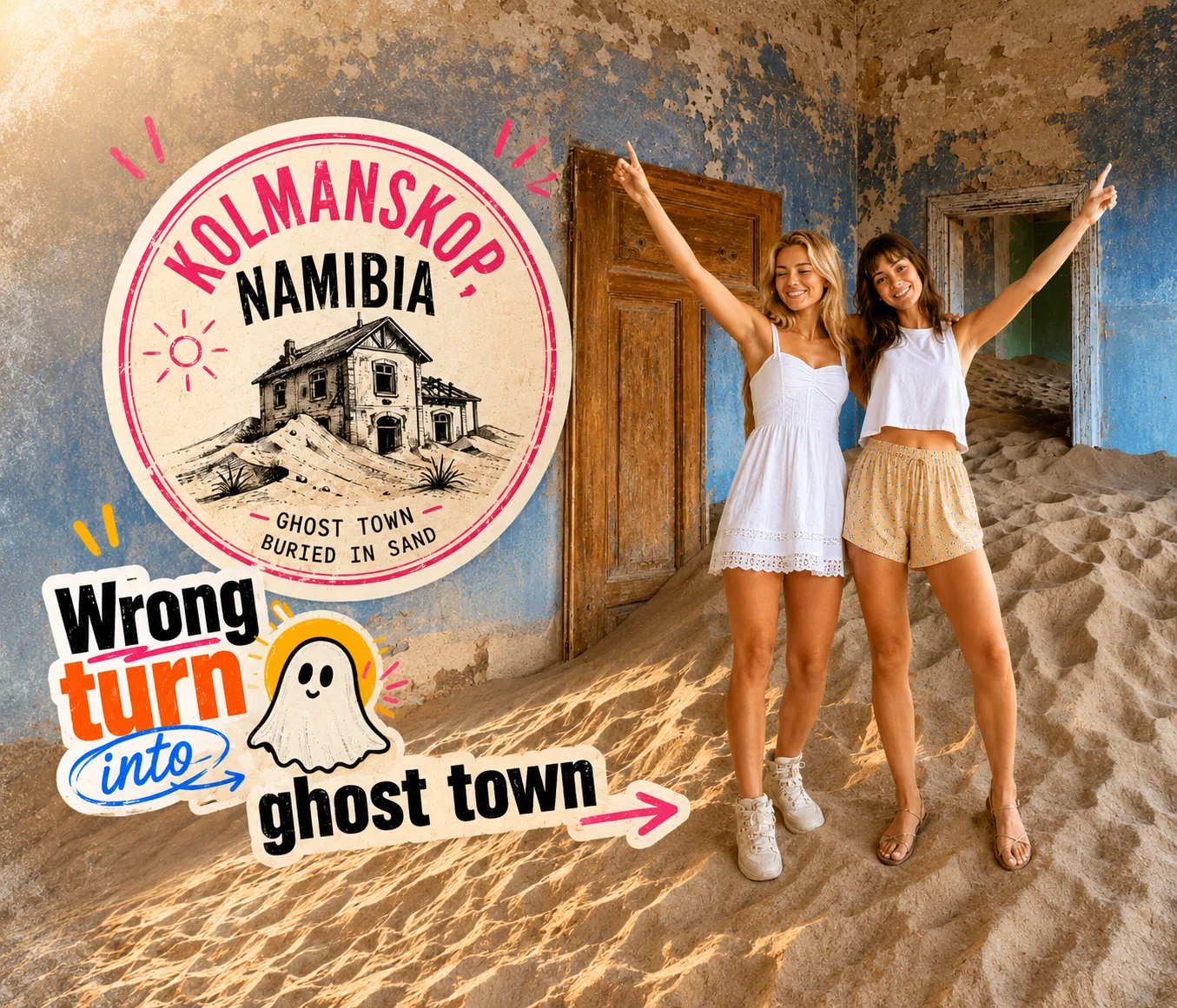
That last category belongs to Kolmanskop, a former diamond mining town hidden in the Namib Desert of southern Namibia. Once one of the richest settlements in Africa, it now looks like a place where the desert moved indoors and never left.
The result is one of the most photographed ghost towns on Earth.
But how does Kolmanskop compare to other famous abandoned places like Pripyat, Hashima Island, or the forgotten mining towns of the American West?
Short answer: they are all ghost towns.
Long answer: they tell completely different stories.
Kolmanskop, Namibia: The Ghost Town Built on Diamonds
What happened here?
Kolmanskop was founded in the early 1900s after diamonds were discovered in the Namib Desert.
Money arrived fast.
So did luxury.
The town had electricity before many European cities, a hospital, a ballroom, a school, and even an ice factory.
Then the diamonds started appearing elsewhere.
People followed the money.
The town was gradually abandoned.
The desert stayed.
What makes it unique?
Not the buildings.
Not the history.
The sand.
Entire rooms are filled with dunes. Hallways disappear under drifting desert sand. Every year the landscape changes a little more.
It feels less like a ghost town and more like an ongoing negotiation between architecture and nature.
Nature is winning.
Pripyat, Ukraine: The Ghost Town Frozen in Time
What happened here?
Pripyat was built for workers at the Chernobyl Nuclear Power Plant.
In April 1986, the Chernobyl disaster changed everything.
Residents were evacuated.
Most never returned.
Unlike Kolmanskop, which faded gradually, Pripyat was abandoned almost overnight.
What makes it unique?
Time stopped.
Schools still contain books.
Apartments still contain personal belongings.
The city feels as if people left expecting to come back a few days later.
Forty years later, the silence remains.
Compared to Kolmanskop
| Kolmanskop | Pripyat |
|---|---|
| Abandoned because diamonds disappeared | Abandoned because of nuclear disaster |
| Nature slowly reclaiming buildings | Human traces still dominate |
| Warm desert landscape | Forest-covered exclusion zone |
| Feels surreal | Feels unsettling |
Kolmanskop tells a story about economics.
Pripyat tells a story about catastrophe.
Hashima Island, Japan: The Concrete Fortress at Sea
What happened here?
Hashima Island, also known as Battleship Island, was once one of the most densely populated places on Earth.
Coal mining made the tiny island incredibly valuable.
When Japan shifted away from coal, the mines closed.
Residents left.
The island became a concrete skeleton in the middle of the sea.
What makes it unique?
Isolation.
Unlike Kolmanskop, where sand enters every room, Hashima is surrounded by endless ocean.
It feels less like nature reclaiming a town and more like civilization abruptly unplugging itself.
Compared to Kolmanskop
| Kolmanskop | Hashima |
|---|---|
| Desert environment | Ocean environment |
| Sand-filled interiors | Concrete high-rises |
| Open landscapes | Dense urban ruins |
| Natural decay through sand and wind | Industrial decay through weather and salt |
Both places exist because of natural resources.
Both disappeared when those resources stopped driving the economy.
Ghost Towns of the American West: Boom, Bust, Repeat
What happened here?
Across the American West, towns appeared wherever gold, silver, or other resources were discovered.
People arrived.
Businesses opened.
Fortunes were made.
Then the resources ran out.
The towns emptied.
This cycle happened hundreds of times.
Places like Bodie or Rhyolite became symbols of the classic boom-and-bust story.
What makes them unique?
They feel familiar.
Wooden saloons.
Dusty streets.
Old mining equipment.
They look like movie sets because many Western movies borrowed their visual language directly from places like these.
Compared to Kolmanskop
| Kolmanskop | American West Ghost Towns |
|---|---|
| German colonial architecture | Frontier-style architecture |
| Desert dunes inside houses | Buildings left largely intact |
| Luxury mining settlement | Rough frontier settlements |
| One of a kind visual identity | Classic ghost town appearance |
If someone says "ghost town," most people imagine the American West.
Kolmanskop is what happens when that idea gets redesigned by a surrealist artist.
Which Ghost Town Feels the Most Unreal?
Each place tells a different story.
Pripyat
A story about disaster.
Hashima
A story about industrial decline.
The American West
A story about boom-and-bust economics.
Kolmanskop
A story about nature taking back what humans built.
That difference matters.
Most ghost towns feel abandoned.
Kolmanskop feels occupied.
Not by people.
By the desert.