Ittoqqortoormiit isn't a museum. It's a working Inuit town where people get up, drop their kids at school, go hunting on the ice, file paperwork at the municipality, complain about the weather and run out of fresh tomatoes on schedule.
Who Lives Here
The population sits around 350 people — down from a peak above 500 in the 1990s. Most residents are Inuit, with family ties to the original 1925 settlers relocated from Tasiilaq. A small number of Danish teachers, healthcare workers and researchers cycle through for fixed-term postings.
In a town this size, most things are run by people you've also seen at the store, on the harbour and at the school door.
How People Make a Living
The local economy is a mix of:
- Traditional hunting and fishing — seal, narwhal, muskox, polar bear (small annual quota), Arctic char.
- Municipal jobs — school, kindergarten, health post, administration.
- The general store and the post — small but essential employers.
- Tourism — guiding for snowmobile trips, dog sledding and the brief summer cruise season.
Hunting is not nostalgia here. It is a regulated, important source of food and income, woven into culture, family life and the legal calendar.
The One Shop
Pilersuisoq, the Greenland-wide chain of village stores, runs the only shop in town. It stocks groceries, basic clothing, fuel, ammunition, household tools and the occasional surprise — an unexpected pallet of mangoes, a single waffle iron, a delivery of children's bicycles.
Resupply comes by ship during the short ice-free summer, and by helicopter the rest of the year. If something runs out in February, it tends to stay out.
School, Church and Health
The town has a primary and lower-secondary school, a kindergarten, a small Lutheran church and a health station staffed by a nurse and a visiting doctor. Serious medical cases are evacuated by helicopter to Tasiilaq or Iceland — weather permitting.
Polar Bears: A Daily Safety Topic
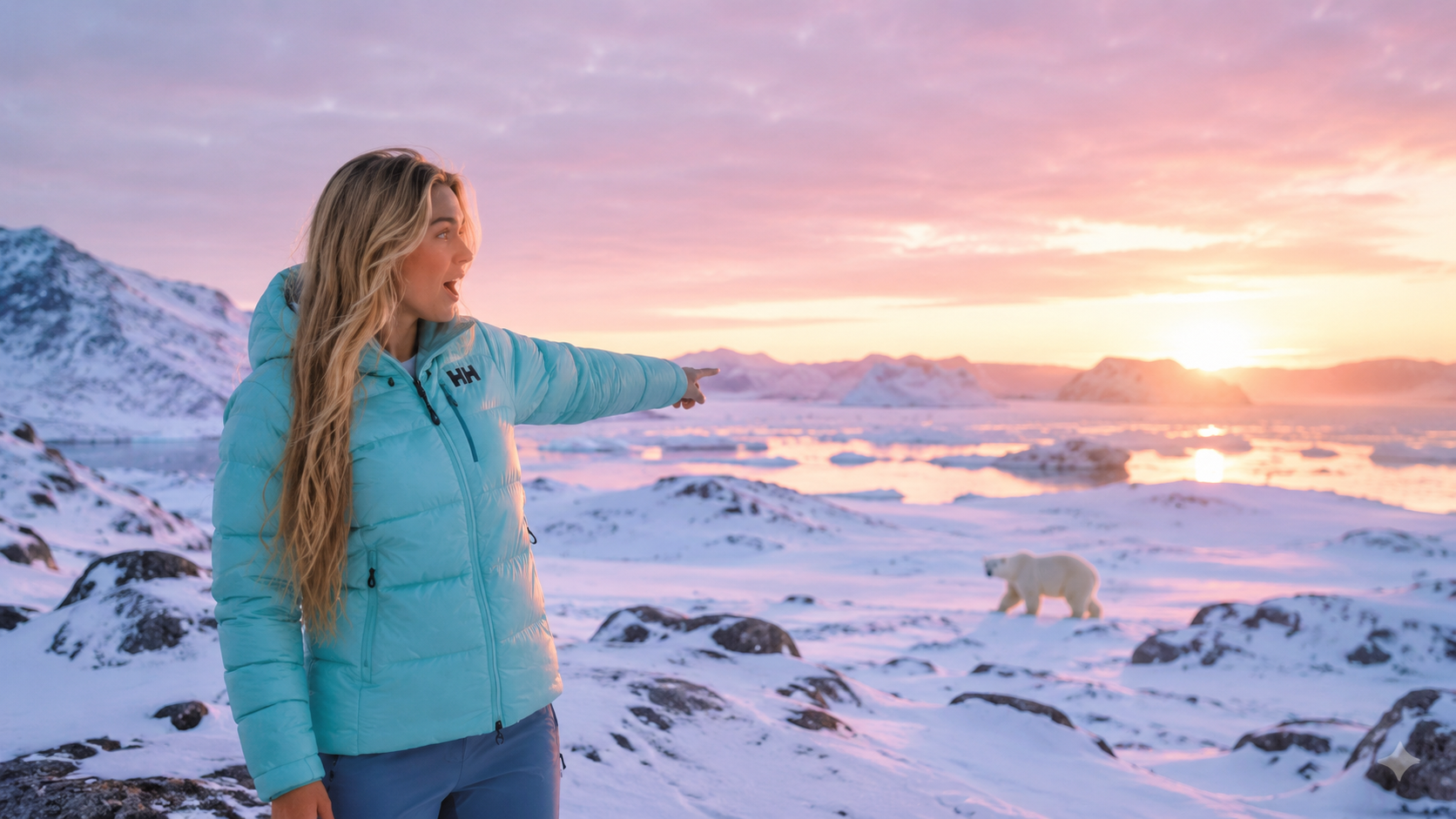
Polar bears regularly pass through the area, especially in late winter and spring. Bear-watch protocols are part of normal life: children are accompanied at dusk, dogs are kept close, and anyone leaving town carries — or travels with someone who carries — a rifle.
For visitors, the rule is simple: do not leave the village limits without an armed local guide. "I'll just take a short walk" is the start of a story you don't want to be in.
Polar Night and the Aurora
From late November to mid-January, the sun never rises above the horizon. Daily life continues by streetlight and headlamp. Children still walk to school. The store still opens. People still throw birthday parties — they just throw them in the dark.
From midwinter onward, the aurora borealis is often overhead for hours, visible from front doorsteps. Around late January, the sun returns: first as a band of pink light, then a slice, then a whole sunrise. People come outside to watch.
What It Feels Like
Slow. Quiet. Watchful. The houses are deliberately bright — yellow, red, blue, green — because the landscape isn't. The calendar runs on the fjord, the ice, the helicopter and the boat, not on calendar months. People are friendly without being eager; they've watched a lot of visitors arrive, take photos, and leave again on the next flight.
If you stay long enough to learn one Greenlandic phrase, watch one full aurora, and recognise three regulars at the store, you start to understand why the people who live here mostly stay.