Why Hydration Matters More in Hot Weather
Your body cools itself mainly through sweating — when sweat evaporates from your skin, it removes heat. That system works well until you lose too much fluid. Once you're dehydrated, your body struggles to regulate temperature, your heart works harder, performance drops, thinking slows and the risk of heat exhaustion rises.
Travel often stacks several dehydration triggers at once: walking for hours, direct sun, a backpack, an unfamiliar climate, salty food, alcohol, limited toilets and limited water. Dehydration rarely begins dramatically. It starts with one skipped break, one extra coffee, one long walk in full sun, one “we'll buy water later.” In hot weather, those small decisions add up fast.
Do Not Wait Until You Feel Thirsty
Thirst is useful, but it's not a perfect early warning. By the time you feel very thirsty, you may already be mildly dehydrated — and on a travel day you're distracted by navigation, photos, conversation and logistics. Treat hydration as maintenance, not emergency repair.
Practical rule
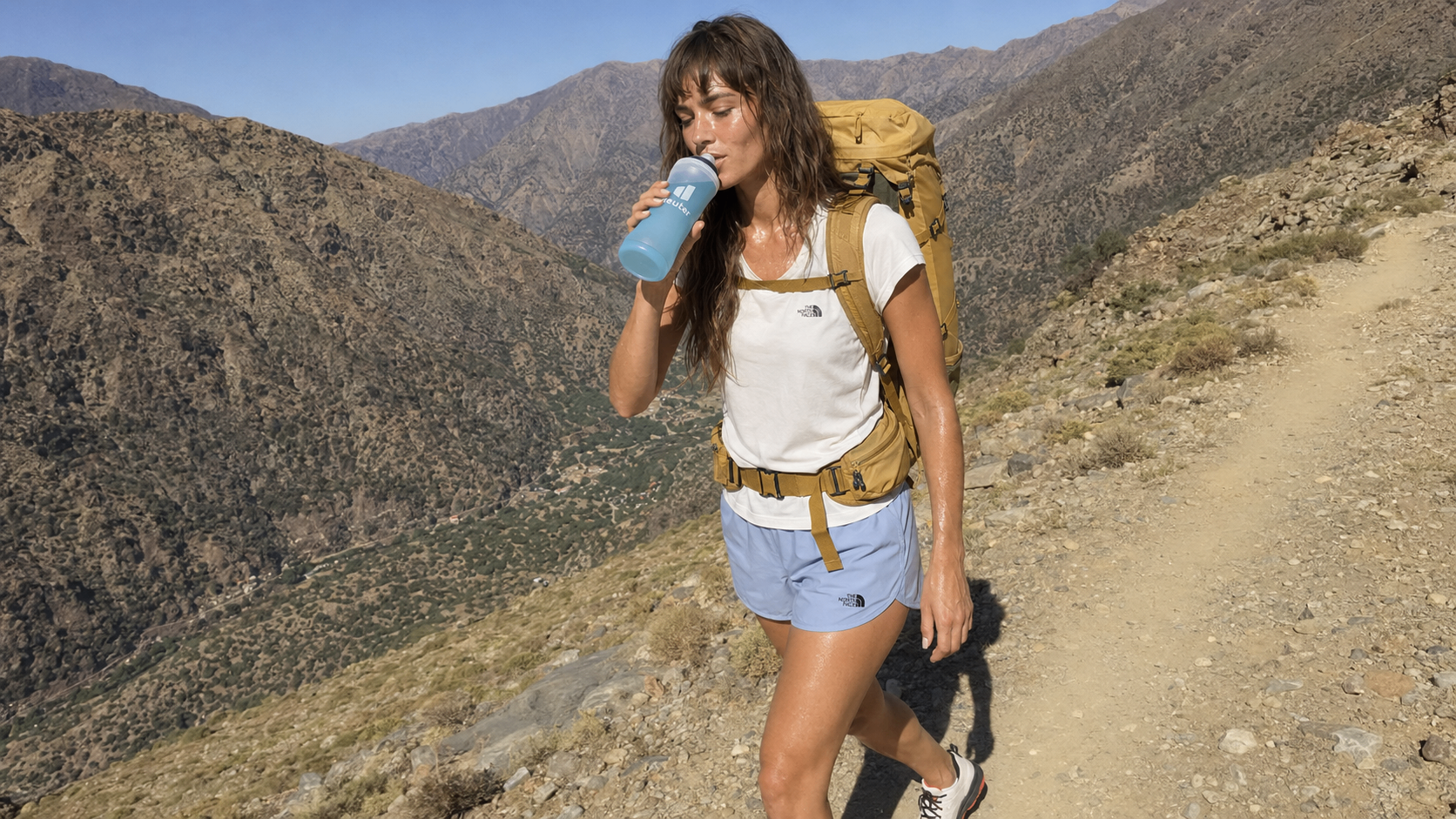
When active in hot weather, take small drinks often: a few mouthfuls every 15–30 minutes for walking or sightseeing, more frequently for steep climbs, cycling, running or carrying a heavy pack. Consistency beats ignoring water for three hours and then drowning one huge bottle at once.
Start Hydrating Before You Leave
If you start the day slightly dehydrated, heat will expose the problem fast. Before a hot day outside:
- Drink water with breakfast.
- Eat something that contains salt and fluid.
- Don't start the day on coffee alone.
- Fill bottles before leaving the accommodation.
- Check where your next refill point is.
- Carry more water than you think you need if the route is uncertain.
Travel mornings are chaotic — packing, check-out, transport, breakfast. Hydration becomes “later.” In hot weather, later is often too late.
How Much Water Should You Carry?
There's no perfect number. It depends on temperature, humidity, sun, wind, altitude, fitness, body size, sweat rate, clothing, intensity, route length and refill points. For a relaxed city walk, one reusable bottle is often enough. For a hike in dry heat, several litres. For a remote route with no water sources, bottle capacity becomes the limit — not your legs.
Useful travel rule
Before you leave, ask:
- How long will we be outside?
- Where is the next reliable water source?
- What happens if the route takes longer than expected?
- Is there shade?
- Can we safely turn back?
If you can't answer those questions, carry more water or choose a shorter route.
Water Is Usually Enough — Until It Is Not
For most travel days, plain water is the best hydration choice — simple, cheap, exactly what most people need. But during long outdoor activity in heat, you lose salt and other electrolytes through sweat. If you sweat heavily for hours and replace everything with plain water, you can start to feel weak, nauseous or crampy.
Consider electrolytes when
- You're hiking, running or cycling for several hours.
- You're sweating heavily, with salt marks on your clothes.
- You're in hot, humid weather.
- You're doing repeated outdoor days.
- You have little appetite but keep sweating.
- You feel unusually weak despite drinking water.
Simple electrolyte options
You don't always need sports drinks. Salty snacks, soup, salted nuts, pretzels, oral rehydration sachets, electrolyte tablets, diluted juice with a salty snack, mineral water and regular meals with salt all work. For most travellers the best formula is the simplest one: water + food + shade + breaks.
Do Not Overdrink
Drinking very large amounts of plain water in a short time without replacing salt can lower blood sodium — a condition called hyponatremia. It's uncommon for casual travellers but can happen during endurance events. The goal is not to drink as much as possible. The goal is to drink enough.
Better signs to watch
- You urinate every few hours.
- Urine is pale yellow rather than very dark.
- You don't feel dizzy when standing.
- Your mouth isn't extremely dry.
- You aren't developing a severe headache.
- You can keep a steady pace without sudden unusual fatigue.
Clear urine all day isn't a trophy. It can mean you're drinking more than you need. Balance matters.
Watch Your Urine, But Don't Obsess
Urine colour is a useful general clue, but it isn't perfect — vitamins, food and medication all affect it. During long activity you may not urinate often because you're sweating more.
Simple practical warning: if you've been active in heat for several hours and haven't needed to pee, drink, rest and reassess. Hydration works best when it prevents the problem.
Plan Water Stops Like You Plan Viewpoints
Before a day outside, check:
- Public fountains, cafés, shops, mountain huts.
- Visitor centres, campgrounds, train and petrol stations.
- Safe natural water sources — and whether purification is needed.
Don't assume water will be available just because a place is popular. Tourist routes can be surprisingly exposed. Some beaches have no shade. Some viewpoints have no shops. Some trails have streams that dry up in summer. Abroad, check whether tap water is safe and plan filters, tablets or reliable refill points.
Be Careful With Alcohol
Alcohol increases fluid loss, reduces judgement and makes risky decisions more likely — swimming too far, hiking back late, skipping water, staying in the sun. In heat, treat it as an extra stressor.
Better rule for travel
- Drink water before and after.
- Eat food with it.
- Avoid drinking in direct sun.
- Don't mix heavy drinking with hiking, swimming or cycling.
- Don't rely on beer as your hydration plan.
- Slow down the next morning if you feel depleted.
The classic holiday mistake is a sunny lunch with alcohol followed by “just a short walk” in extreme heat. That walk can feel much longer than expected.
Coffee and Tea Are Not the Enemy
Moderate caffeine isn't a major dehydration problem for most people. The issue is context — one coffee in the morning isn't the same as several strong coffees, no water, a long walk and midday sun. Balance coffee with water and food. Simple rule: enjoy the coffee, carry the water.
Eat Your Hydration Too
Water-rich foods help, especially on travel days when you don't feel like drinking constantly: watermelon, oranges, cucumber, tomatoes, grapes, berries, melon, yoghurt, soups, smoothies.
Salty foods help when you're sweating a lot: salted nuts, crackers, olives, cheese, soup, sandwiches, pretzels.
A light lunch with water, salt and fresh produce can work better than bottle after bottle. Outdoor hydration is a whole-day nutrition problem, not just a bottle problem.
Adjust Your Hydration to the Climate
Dry heat
Sweat evaporates quickly — you may not feel soaked but you can lose a lot of fluid. Deserts, high-altitude sun, dry windy regions.
Humid heat
Sweat doesn't evaporate easily. You feel drenched and unable to cool down — more dangerous because the cooling system is less efficient.
High-altitude heat
You breathe faster and lose more fluid through respiration. Sun exposure is stronger.
Windy coastal heat
Wind makes you feel cooler while still drying you out.
Travel lesson: don't judge hydration only by how sweaty you feel. In dry or windy conditions, sweat disappears before you notice it.
Special Tips for Hiking
Before the hike
- Drink water at breakfast.
- Check route length and elevation.
- Identify refill points.
- Carry extra water if uncertain.
- Pack salty snacks.
- Avoid starting late in extreme heat.
During the hike
- Drink small amounts regularly.
- Take shade breaks.
- Eat before you feel empty.
- Reduce pace on climbs.
- Refill whenever you safely can.
- Don't pass a reliable water source with empty bottles.
After the hike
- Drink gradually.
- Eat a real meal.
- Replace salt if you sweated heavily.
- Monitor headache, dizziness or nausea.
- Rest before alcohol.
The most dangerous sentence on a hot hike: “We're probably almost there.” Check the map. Check your water. Then decide.
Special Tips for City Travel
Cities can feel hotter than the forecast — concrete, asphalt and traffic hold heat, especially in afternoon and evening. For hot city days:
- Carry a bottle and use refill stations.
- Plan museum or indoor breaks.
- Walk on shaded streets.
- Avoid long exposed squares at midday.
- Use public transport for longer transfers.
- Eat lighter lunches.
- Keep electrolytes or salty snacks if walking all day.
A city break can involve 20,000 steps without anyone calling it a hike. Your body doesn't care whether the route was scenic or accidental — it still needs water.
Special Tips for Road Trips
Road trips create a different problem: people drink less because they don't want to stop. In hot weather that's risky — dehydration reduces concentration and makes driving less safe.
- Keep water within reach.
- Carry more than you expect to need.
- Don't leave bottles in extreme heat for long periods.
- Plan rest stops.
- Drink before you feel tired.
- Check on passengers, children and older adults.
- Never leave people or pets in a parked car.
Crossing remote areas? Carry emergency water separately from your normal drinking supply.
Warning Signs You Need to Stop
Stop activity, move to shade or a cool place and drink if you notice:
- Dizziness, headache, nausea.
- Unusual fatigue.
- Muscle cramps.
- Heavy sweating with weakness.
- Dry mouth, very dark urine.
- Feeling faint, fast heartbeat.
- Chills or goosebumps in heat.
These can be signs of heat exhaustion. Don't try to push through. Heat rewards early decisions and punishes pride.
When It Becomes an Emergency
Seek urgent medical help if someone has confusion, collapse, fainting, seizures, hot skin with altered behaviour, inability to drink or worsening symptoms despite cooling and rest — signs of heatstroke. While waiting, move them out of the heat, cool them rapidly and don't leave them alone.
A Simple Outdoor Hydration Plan
Before leaving
- Drink water with breakfast.
- Fill your bottles.
- Check refill points.
- Pack salty snacks.
- Avoid starting dehydrated.
During activity
- Drink small amounts regularly.
- Take breaks in shade.
- Eat before you feel empty.
- Use electrolytes for long sweaty efforts.
- Refill before you're desperate.
After returning
- Drink gradually.
- Eat a balanced meal.
- Replace salt if you sweated heavily.
- Rest before alcohol.
- Watch for delayed headache or dizziness.
What to Pack for Hot-Weather Hydration
- Reusable water bottle.
- Extra soft flask or hydration bladder.
- Electrolyte tablets or sachets.
- Salty snacks.
- Water purification tablets or filter.
- Sun hat and lightweight long-sleeve layer.
- Small towel or bandana.
- Map with water points.
- Backup cash for shops or cafés.
For remote travel add an emergency water reserve, a second purification method, a route plan shared with someone and knowledge of bailout points. The best hydration strategy is the one you can actually follow when tired, hot and slightly annoyed.
Common Hydration Mistakes
- Drinking nothing in the morning. Starting dehydrated makes the whole day harder.
- Carrying too little water because it's heavy. Water is heavy because it's useful.
- Depending on a refill point you didn't verify. A closed café or dry stream changes the day.
- Drinking only plain water during long sweaty activity. Add food, salt or electrolytes.
- Ignoring early symptoms. A headache in heat isn't always “just travel fatigue.”
- Drinking too much too fast. Hydration should be steady, not panicked.
- Treating beer as recovery. A cold drink may feel good — it isn't a recovery plan.
Final Thought
Good hydration in hot weather isn't about one giant bottle and hope. It's a travel skill — planning water before the route, drinking before you feel desperate, replacing salt when you sweat heavily, respecting the hottest part of the day and stopping early when your body warns you. The best outdoor days aren't the ones where you ignore the heat. They're the ones where you manage it well enough to keep enjoying the place you came to see.